GLOBAL CRISIS: MIDDLE EAST WAR, OIL PRICE SURGE, AND U.S. SECURITY SHAKE-UP RATTLE WORLD ECONOMY
By Dr. Odimientimi Agbedeyi
For Global Egberi Media International Ltd
The world is witnessing one of the most dangerous geopolitical crises in recent years as the ongoing war in the Middle East continues to escalate, sending shockwaves across global politics, energy markets, and international diplomacy.
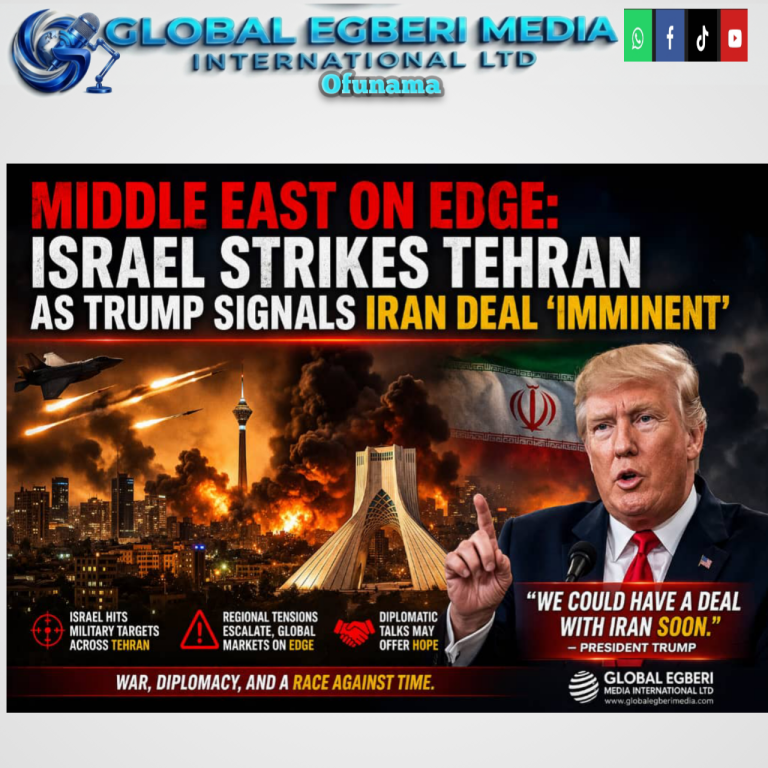
The conflict, involving Iran, Israel, and the United States, has rapidly intensified over the past weeks, triggering deadly airstrikes, retaliatory missile attacks, and serious threats to global oil supply routes. Analysts warn that the unfolding situation could reshape global security dynamics and significantly affect economies across continents.
Escalating Military Conflict in the Middle East
The current crisis stems from escalating hostilities between Israel and Iran, with the United States playing a major role in supporting military operations against Iranian targets.
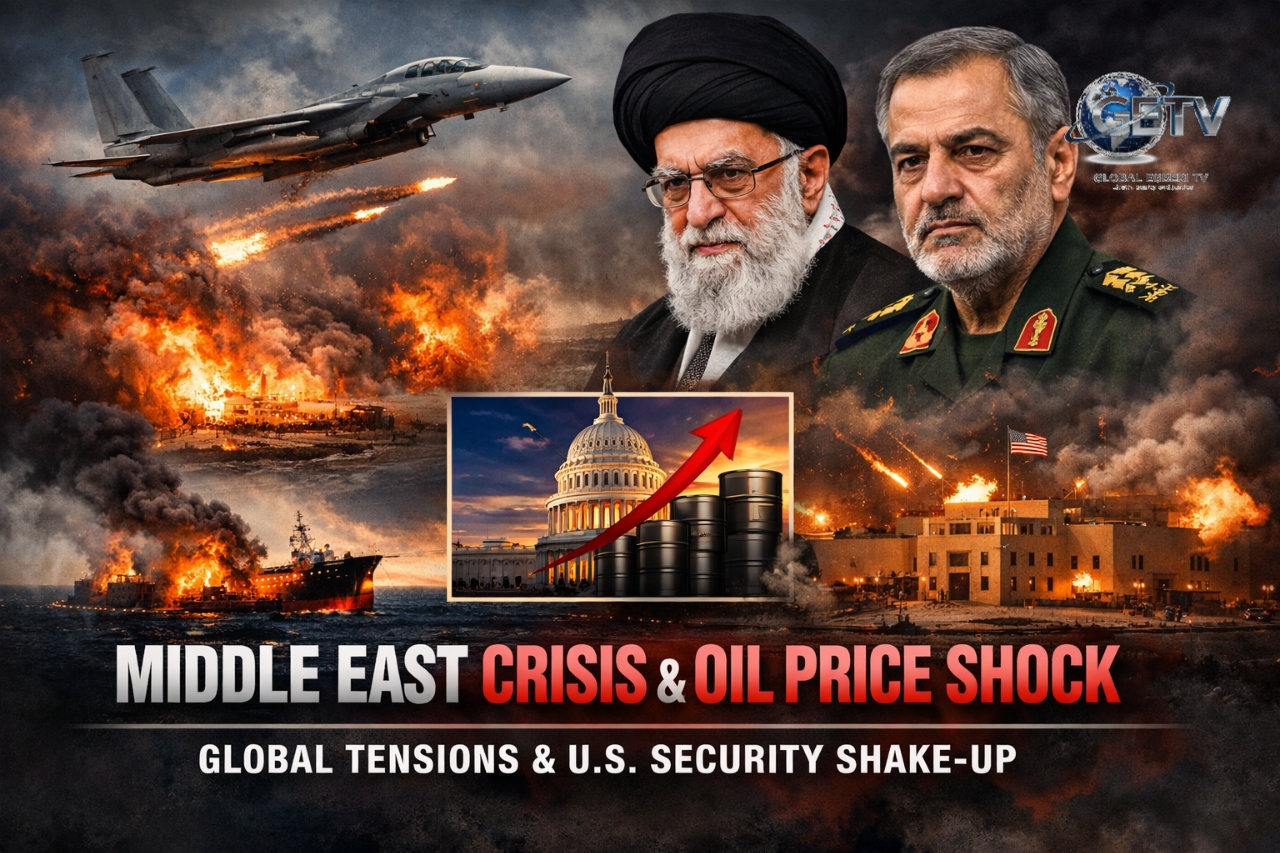
Recent reports indicate that Israeli airstrikes have targeted strategic Iranian facilities and military infrastructure. In one of the most dramatic developments, Israeli authorities claimed that a high-ranking Iranian security chief, Ali Larijani, was killed during a targeted strike on Iranian territory. The development has further inflamed tensions across the already volatile region. (The Straits Times)
The military campaign has also included large-scale air operations targeting key strategic areas. Earlier this month, United States forces carried out a massive bombing raid on Iran’s Kharg Island, a critical oil export hub, destroying dozens of military facilities believed to be linked to missile operations and naval mines threatening international shipping routes. (Wikipedia)
Iran has responded with a series of retaliatory attacks across the Gulf region, launching drones and missiles toward strategic infrastructure and military installations. Several countries in the region have activated air defense systems amid fears that the conflict could expand beyond its current boundaries.
Security analysts warn that if the situation continues to deteriorate, the confrontation could evolve into a wider regional war involving multiple international actors.
Oil Prices Surge as Global Energy Supply Faces Threat
One of the most immediate consequences of the war has been a sharp surge in global oil prices, as the conflict threatens one of the most critical energy transit routes in the world.
The Strait of Hormuz — a narrow maritime corridor through which nearly 20 percent of the world’s oil supply passes — has become a focal point of geopolitical tension. Iran has warned that vessels linked to the United States and its allies could be considered legitimate targets in the strategic waterway. (The Guardian)
Recent attacks on energy infrastructure and shipping routes have significantly disrupted oil exports. According to reports, Iran’s drone and missile strikes on oil and gas facilities in the Gulf region forced the suspension of over one million barrels of daily oil exports. (The Guardian)
As a result, global crude prices have surged above $100 per barrel, nearly 50 percent higher than levels recorded before the conflict began. The rising energy costs are already triggering economic concerns worldwide, with analysts warning of potential inflation spikes and fuel shortages in several countries.
Some Asian nations have reportedly begun implementing fuel-saving policies to manage the impact of the energy disruption.
Political Shock in Washington
The war has also triggered political tremors within the United States government.
In a surprising move that has generated intense debate in Washington, the Director of the U.S. National Counterterrorism Center, Joe Kent, announced his resignation, citing disagreements over the handling of the Iran conflict.
In his resignation statement, Kent reportedly said he could not support the ongoing military campaign and questioned whether Iran posed an immediate threat to the United States. The dramatic departure has fueled political controversy and raised questions about the direction of American foreign policy in the Middle East. (The Times of India)
Observers believe the resignation reflects deeper divisions within the U.S. security establishment over the escalating war and its potential long-term consequences.
Global Diplomatic Tensions Rise
The crisis has also created friction among Western allies. Reports indicate that several allied nations have resisted calls to deploy naval forces to the Persian Gulf, despite pressure from Washington to support military operations aimed at securing shipping routes.
Meanwhile, global institutions and world leaders are urging restraint and calling for diplomatic solutions to prevent the conflict from spiraling into a broader international war.
International analysts warn that prolonged instability in the Middle East could have devastating consequences for global markets, international trade, and geopolitical stability.
A World on Edge
As the war continues to evolve, millions of people across the Middle East are facing uncertainty, displacement, and economic hardship.
Experts warn that the coming weeks could prove decisive. If diplomatic interventions fail and military operations continue to escalate, the world could be heading toward one of the most serious geopolitical crises of the decade.
For now, governments, financial markets, and citizens around the globe remain on high alert, watching closely as events unfold in a region whose stability has long been central to global peace and economic security.
Source: International News Agencies
Website: www.globalegberi.com.ng/wp
About the Author