By Dr. Odimientimi Agbedeyi
Global Egberi Media International Ltd
Introduction
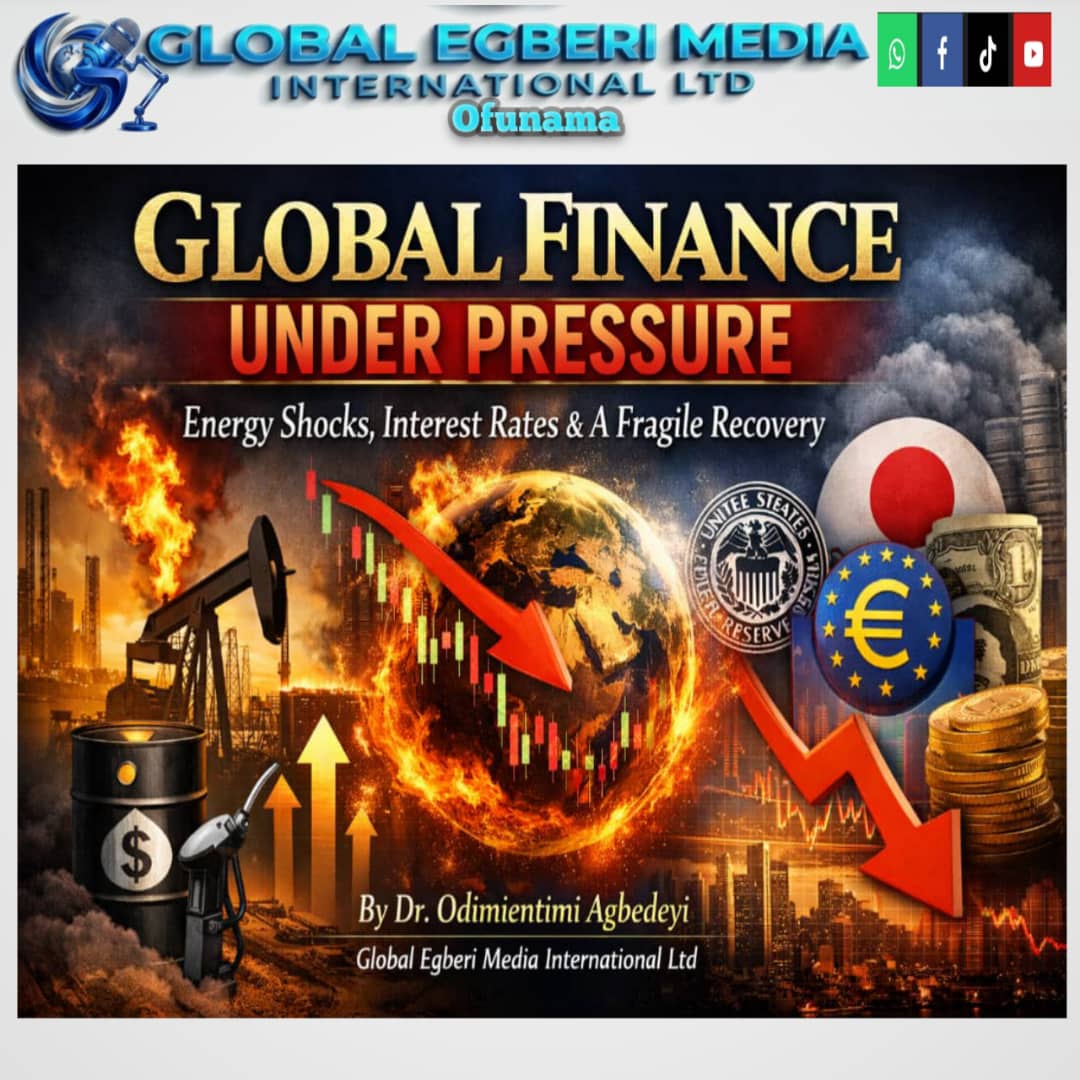
The global financial system in 2026 is facing renewed turbulence as rising energy prices, inflation fears, and uncertain monetary policies converge to reshape the economic landscape. What initially appeared to be a year of stable recovery has rapidly transformed into a period of volatility, raising concerns among investors, governments, and international financial institutions.
Energy Crisis Driving Global Financial Stress
The surge in global oil prices has become a major destabilizing force. Benchmark crude prices have climbed sharply due to heightened geopolitical tensions in the Middle East, threatening supply chains and increasing production costs worldwide.
Critical oil transit routes such as the Strait of Hormuz remain vulnerable, and any disruption could significantly worsen global supply shortages. The ripple effects are already visible across transportation, manufacturing, and food sectors, pushing up the cost of living globally.
Inflation Resurfaces as a Global Threat
After months of moderation, inflation is once again gaining momentum. Institutions like the International Monetary Fund and the Organisation for Economic Co-operation and Development have issued warnings that persistent energy shocks could drive inflation higher across major economies.
Even moderate increases in oil prices are capable of pushing inflation upward, creating a dangerous economic condition where prices rise while growth slows—a phenomenon widely known as stagflation.
Central Banks Face Difficult Choices
Global central banks are now navigating a complex policy environment. The Federal Reserve is maintaining a cautious stance, balancing inflation control with the need to sustain economic growth.
Meanwhile, the Bank of Japan is reconsidering its long-standing accommodative policies, signaling potential rate hikes. In Europe, the European Central Bank remains watchful, with policymakers prepared to act if inflation exceeds targets.
This divergence in global monetary strategies highlights the complexity of managing inflation without triggering economic slowdown.
Financial Markets Experience Heightened Volatility
Global markets are reacting sharply to these developments. Equity markets have shown signs of weakness, while bond yields continue to rise, reflecting investor concerns over inflation and interest rates.
Safe-haven assets, including the US dollar, are gaining traction as investors adopt risk-averse strategies. This shift underscores growing uncertainty in global financial markets and signals cautious sentiment among investors.
Implications for Africa and Emerging Economies
For emerging economies, particularly in Africa, the current global financial climate presents mixed outcomes. Oil-exporting countries may benefit from higher prices, but the broader economic impact includes rising inflation, currency depreciation, and increased borrowing costs.
The World Bank has warned that many developing economies are still struggling to achieve full recovery, and rising global interest rates could trigger capital outflows, further weakening local economies.
Conclusion: Navigating an Uncertain Future
The global financial system is entering a delicate phase where resilience and adaptability will determine economic stability. Policymakers must strike a balance between controlling inflation and sustaining growth, while investors must prepare for continued volatility.
As geopolitical tensions persist and financial conditions tighten, the global economy faces a defining moment that will shape its trajectory for years to come.
About the Author