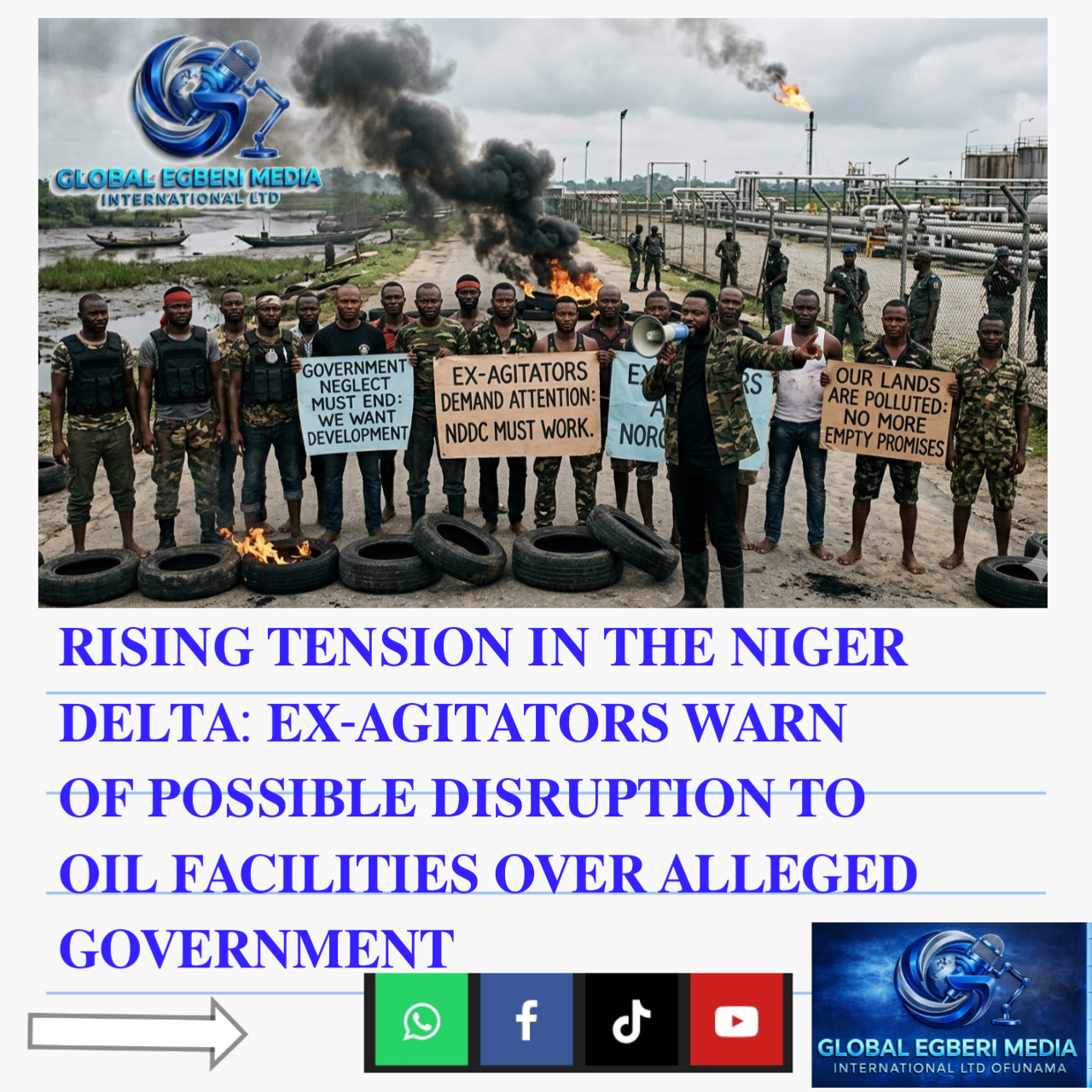
The fragile peace in Nigeria’s oil-rich Niger Delta region may be facing renewed strain following a strongly worded message circulating on social media, allegedly issued by individuals identifying themselves as beneficiaries of the Presidential Amnesty Programme.
In a recent Facebook post attributed to Ayebanengiyefa Wabisemunyu, who publicly identifies as a member of the Presidential Amnesty Programme Council, a group described as “United Ex-Agitators” issued a warning directed at the Federal Government and other political office holders. The statement alleges persistent neglect and lack of attention to the concerns of former militant fighters who embraced the government’s amnesty initiative aimed at restoring peace in the region.
According to the message, the ex-agitators expressed frustration over what they described as the continued “deaf ears and blind eyes” allegedly shown by authorities to their grievances. The post suggested that if the situation persists without urgent intervention, the country may witness serious consequences, particularly within the Niger Delta.
The statement further hinted at possible actions targeting oil facilities in the region, a development that could significantly impact Nigeria’s economic stability if tensions escalate. The Niger Delta remains the backbone of Nigeria’s petroleum industry, accounting for the vast majority of the nation’s crude oil production and export revenue.
Observers note that such warnings evoke memories of the turbulent period before the establishment of the Presidential Amnesty Programme in 2009. That initiative, introduced under the administration of late President Umaru Musa Yar’Adua, was designed to disarm militant groups, reintegrate former fighters into society, and restore stability to the region’s oil infrastructure.
Over the years, the programme has served as a cornerstone of the Federal Government’s peace-building efforts in the Niger Delta, offering stipends, training opportunities, and reintegration support to thousands of ex-agitators. However, periodic complaints from beneficiaries about delays in payments, alleged marginalization, and administrative bottlenecks have continued to surface.
Security analysts warn that inflammatory rhetoric, even when expressed on social media, should not be taken lightly given the region’s historical context. The Niger Delta has experienced cycles of unrest in the past, with militant groups sabotaging pipelines, kidnapping oil workers, and disrupting crude production—actions that once caused Nigeria’s oil output to plummet drastically.
Experts also caution that any renewed threats against oil installations could alarm international investors and disrupt global energy markets, especially at a time when Nigeria is striving to stabilize its economy and improve oil production levels.
While it remains unclear whether the statement represents the position of an organized group or merely reflects the personal frustration of individuals, stakeholders believe the development underscores the need for continuous dialogue between government authorities and stakeholders in the Niger Delta.
Community leaders, civil society organizations, and peace advocates have consistently emphasized that sustained engagement, transparency, and the prompt resolution of grievances are essential to maintaining long-term stability in the region.
At the time of filing this report, there has been no official response from the management of the Presidential Amnesty Programme or the Federal Government regarding the viral statement. Nevertheless, observers say proactive communication and reassurance may help prevent unnecessary escalation.
The Niger Delta has made significant strides toward peace over the past decade, and many stakeholders fear that inflammatory rhetoric could undermine those gains if not carefully managed.
As tensions simmer beneath the surface, the coming days may determine whether this warning represents a passing expression of frustration or the early sign of deeper discontent among former agitators.
Source: Facebook post attributed to Ayebanengiyefa Wabisemunyu
🌐 https://globalegberi.com.ng/wp
Author:
Dr. Odimientimi Agbedeyi
About the Author