Nigeria Ranked 4th Most Terrorism-Impacted Nation Globally as Attacks Surge — Global Terrorism Index Raises Alarm
By Dr. Odimientimi Agbedeyi
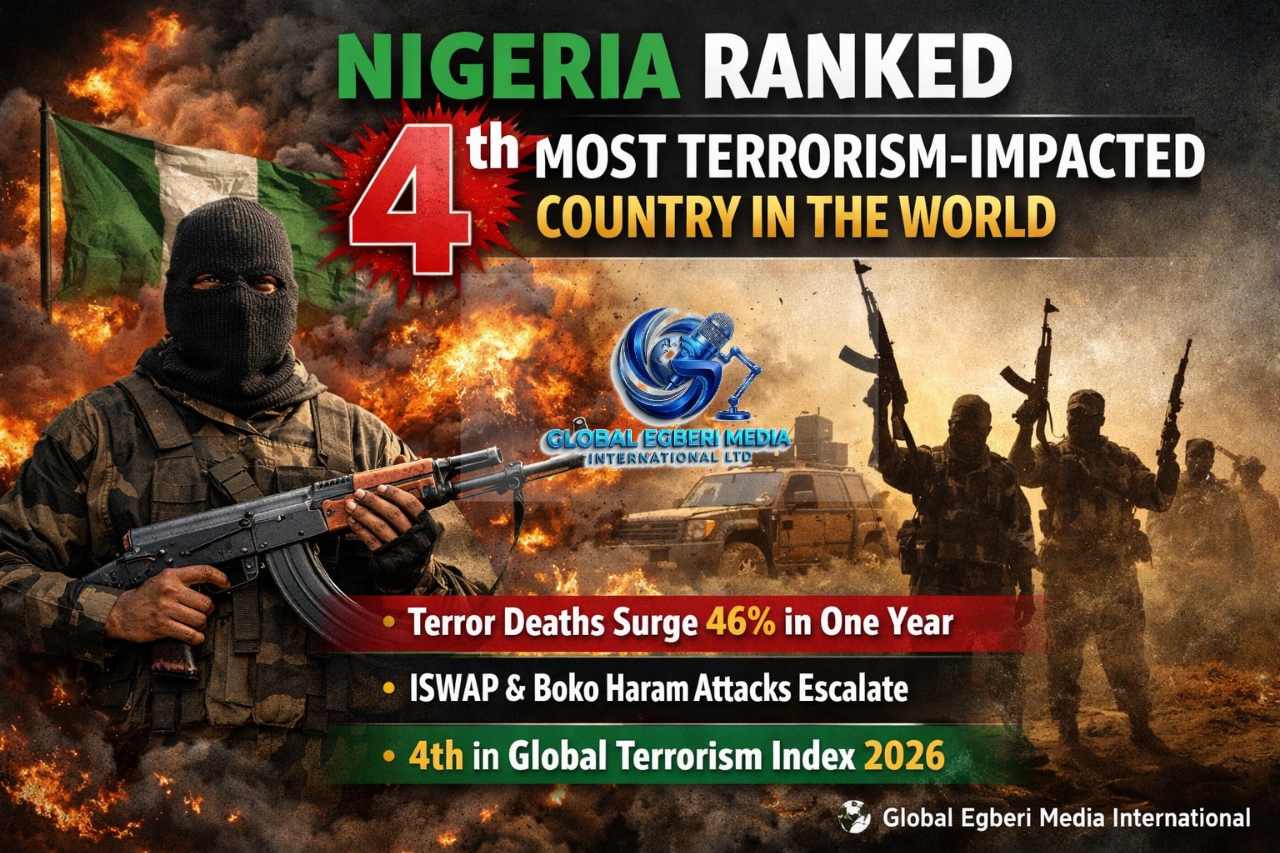
Nigeria’s fragile security architecture has once again come under intense global scrutiny as the country emerged the fourth most terrorism-impacted nation in the world, according to the 2026 Global Terrorism Index (GTI) released on Thursday by the Institute for Economics and Peace.
The latest report paints a troubling picture of Nigeria’s security environment, revealing that despite global progress in reducing terrorism-related deaths, the West African giant recorded the largest increase in terrorism fatalities worldwide.
Nigeria’s Rising Terror Toll
According to the GTI report, terrorism-related deaths in Nigeria rose sharply from 513 in 2024 to 750 in 2025, representing one of the most alarming increases recorded globally within the reporting period.
The surge has been attributed largely to escalating activities of extremist groups such as Islamic State West Africa Province (ISWAP) and Boko Haram.
The report indicates that attacks by ISWAP alone increased dramatically by 360 percent, rising from 20 incidents in 2024 to 92 attacks in 2025.
Combined with Boko Haram operations, the two terrorist organizations were responsible for nearly 80 percent of terrorism-related deaths in Nigeria, highlighting the persistent security crisis in the country’s North-East region.
Deadly Massacres in Borno
The GTI report highlighted two particularly devastating attacks in Borno State which significantly contributed to the spike in casualties.
One of the incidents occurred on May 15, 2025, when fighters belonging to the Jama’atu Ahlis Sunna Lidda’awati wal-Jihad faction of Boko Haram abducted about 100 civilians from the villages of Mallam Karamti and Kwatandashi. Security reports later confirmed that 57 bodies were recovered, leaving dozens still unaccounted for.
Another deadly episode took place in September 2025 in the community of Darajamal, where militants launched a coordinated assault that killed 58 villagers and five Nigerian soldiers, further deepening fears over the deteriorating security situation in the region.
Global Ranking: Pakistan Tops the List
The 2026 Global Terrorism Index ranked the following countries as the most impacted by terrorism:
- Pakistan
- Burkina Faso
- Niger
- Nigeria
- Democratic Republic of the Congo
Pakistan topped the index for the first time, largely due to escalating attacks by militant groups such as the Tehrik-i-Taliban Pakistan and the Baloch Liberation Army.
Global Decline, Nigeria’s Disturbing Exception
Ironically, the global terrorism trend showed significant improvement. Worldwide deaths from terrorism dropped by 28 percent, falling to 5,582 fatalities, the lowest level recorded since 2007.
However, Nigeria stands out as an alarming exception to this global decline.
Security analysts note that only five countries account for nearly 70 percent of global terrorism deaths, with Nigeria firmly among them.
The GTI also observed that while terrorism-related deaths in Sub-Saharan Africa outside the Sahel dropped to their lowest level since 2016, Nigeria experienced an increase in both attacks and fatalities, making it a troubling outlier.
Drivers of Nigeria’s Worsening Crisis
Experts cited in the report attribute Nigeria’s deteriorating security landscape to several factors, including:
- Weak border security across the Sahel corridor
- Rising youth radicalization
- Expansion of extremist recruitment networks
- Increasing instability in Nigeria’s North-West region
The report further warned that a 280 percent rise in youth radicalization and lone-wolf extremist actors in parts of the West could create new security challenges if not urgently addressed.
Growing Concerns for National Stability
For Africa’s largest economy, the findings serve as a sobering reminder that the battle against violent extremism remains far from over.
Security experts warn that unless decisive action is taken to strengthen intelligence coordination, border surveillance, and economic opportunities for vulnerable youths, Nigeria risks slipping deeper into a cycle of prolonged insurgency and instability.
As the world celebrates gradual gains in counter-terrorism, Nigeria’s situation underscores the urgent need for renewed regional cooperation and stronger domestic strategies to combat violent extremism.
Without such interventions, analysts warn, the country may continue to feature prominently in future global terrorism reports.
Source: Sahara Reporters / Global Terrorism Index 2026
About the Author