
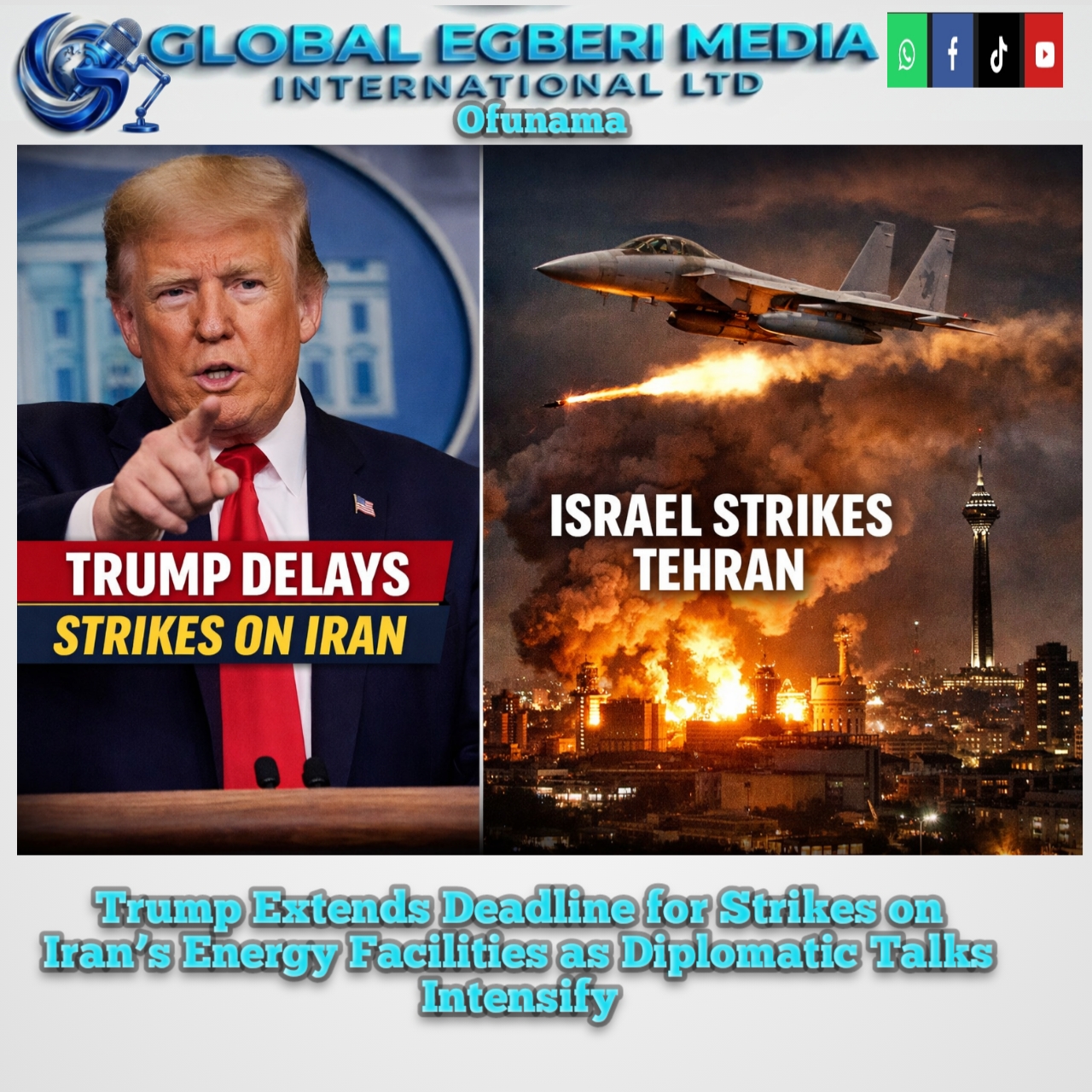
The geopolitical crisis in the Middle East has entered another delicate phase as the President of the United States, Donald Trump, announced a temporary postponement of planned American strikes on Iran’s critical energy infrastructure, signaling a cautious shift toward diplomacy amid a still-volatile military environment.
The decision came as tensions remain high in the ongoing conflict involving Iran, Israel and the United States, a confrontation that began escalating dramatically in late February 2026 following coordinated U.S.–Israeli military operations against Iranian targets. (Wikipedia)
Ten-Day Pause on Energy Infrastructure Strikes
According to international reports, President Trump announced that the United States would delay planned attacks on Iran’s oil and energy facilities for ten days, extending the deadline until April 6, 2026, to allow ongoing negotiations to continue. (Reuters)
Trump explained that the extension followed requests for additional time from Tehran and expressed optimism about diplomatic progress, stating that the negotiations were “going very well.” (Reuters)
The threatened strikes had been linked to escalating tensions over the closure and militarization of the Strait of Hormuz, a strategic maritime route through which a substantial portion of the world’s oil supply passes. (Al Jazeera)
The Trump administration had earlier warned that if Iran failed to comply with U.S. demands related to shipping access and regional security, American forces could target key energy installations critical to Iran’s economy.
Israeli Airstrikes Intensify Military Pressure
Even as diplomatic contacts continue, military activity in the region has not subsided.
The Israeli military confirmed that its forces conducted wide-scale airstrikes on targets in Tehran, the Iranian capital, early Friday morning, part of an ongoing campaign against strategic Iranian infrastructure and military positions. (Al Arabiya English)
These operations come nearly a month after the beginning of the current war, which has seen repeated missile exchanges, air raids, and cyber operations between the opposing sides.
A Conflict With Global Consequences
The confrontation has already triggered a series of retaliatory attacks and regional instability across the Middle East. Iran has launched missile strikes toward Israel and other regional targets following earlier U.S.–Israeli operations against Iranian facilities. (Wikipedia)
At the center of the crisis lies the Strait of Hormuz, one of the world’s most strategically important shipping routes for energy trade. Disruption in this corridor could significantly affect global oil supply chains and international markets. (Wikipedia)
Analysts warn that any direct U.S. attack on Iran’s energy sector could further escalate the conflict and potentially provoke wider regional retaliation.
Diplomacy vs. Escalation
Despite the continuing airstrikes and military deployments, diplomatic channels remain active. Reports indicate that intermediaries—including regional and international actors—are attempting to facilitate dialogue between Washington and Tehran in an effort to avert a broader regional war.
However, major disagreements remain. Iranian officials have reportedly demanded conditions such as compensation for war damage and recognition of their sovereignty over the Strait of Hormuz before any formal agreement could be reached. (The Guardian)
A Region on Edge
The postponement of the strike deadline may offer a narrow window for diplomacy, but the simultaneous continuation of military operations suggests that the Middle East crisis remains precarious.
For now, global leaders and international observers continue to watch developments closely, aware that decisions made in the coming days could determine whether the region moves toward de-escalation or a far more destructive confrontation.
Source: Reuters / Al-Jazeera / Al-Arabiya / Washington Post / International Agencies
Global Egberi Media International
🌐 https://globalegberi.com.ng/wp
Author: Dr. Odimientimi Agbedeyi
About the Author