“Don’t Bomb, Talk Instead”: Israelis Rally in Tel Aviv Demanding End to Iran War
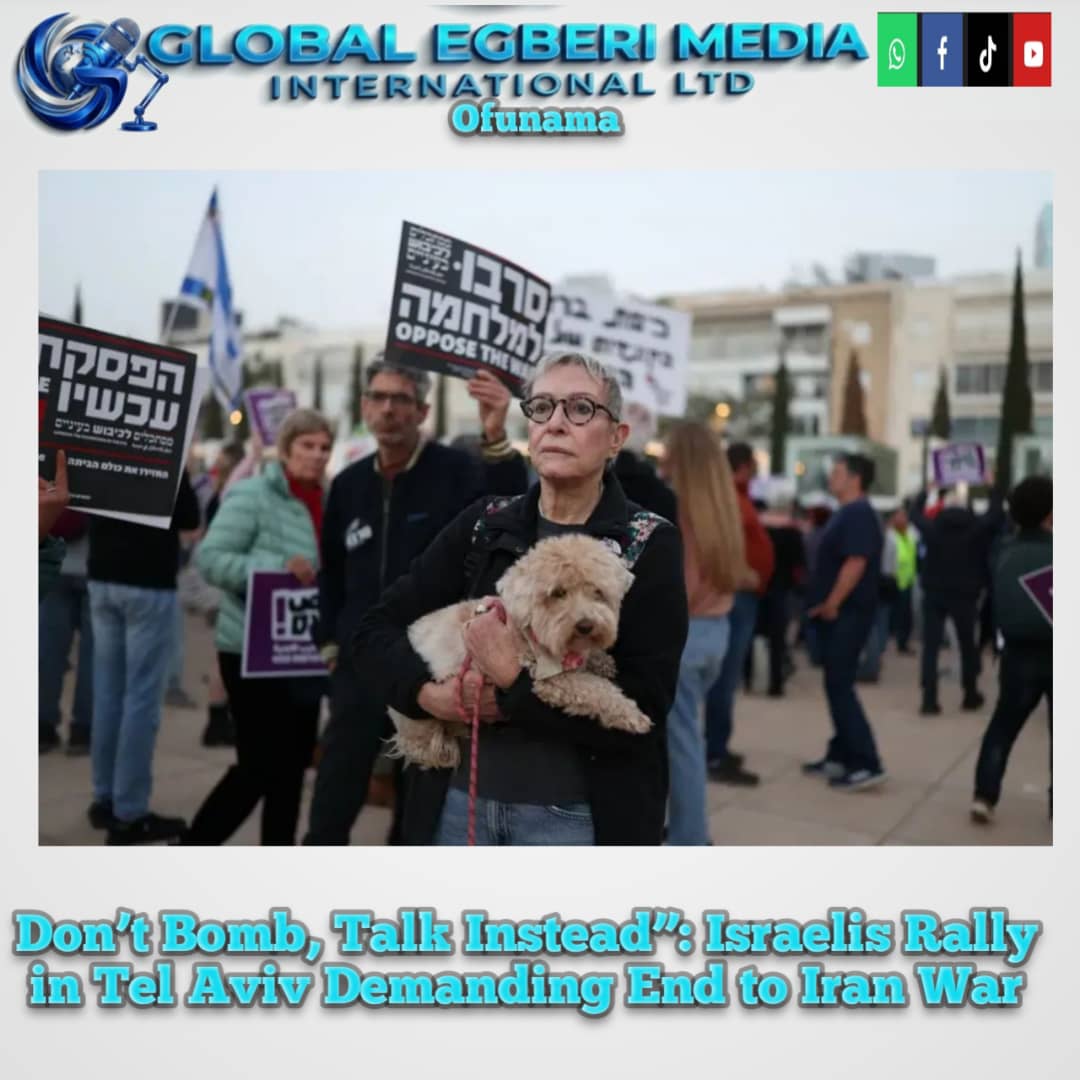
Hundreds of Israelis poured onto the streets of Tel Aviv in a rare display of public dissent, calling for an end to the escalating war between Israel and Iran. Carrying banners with messages such as “Don’t bomb — talk!” and “End the endless war,” the demonstrators demanded diplomacy rather than continued military confrontation in the Middle East. (A News)
The protest, which took place at the well-known HaBima Square in Tel Aviv, saw activists, civil society groups, and ordinary citizens gather to express their frustration with the government’s ongoing military campaign against Iran. Demonstrators also directed strong criticism toward Israeli Prime Minister Benjamin Netanyahu, accusing his administration of prolonging the conflict without clear objectives or a defined strategy for peace.
Growing Dissent in the Midst of War
The demonstrations came at a time of heightened tensions in the Middle East following weeks of military exchanges between Israel and Iran. Since late February 2026, Israel and its allies have launched strikes targeting Iranian infrastructure and military facilities, prompting retaliatory missile attacks from Iran directed at Israeli cities and strategic locations across the region. (A News)
Amid the escalating violence, Israeli citizens have increasingly begun questioning the long-term implications of the war. While many Israelis initially supported the government’s actions, voices advocating for restraint and diplomatic solutions are gradually gaining attention.
During the rally, protesters held placards urging their government to reconsider its approach. Many insisted that dialogue and negotiations were the only sustainable path to resolving tensions with Iran.
One protest banner read simply: “Don’t bomb — talk!” while others carried messages calling for an end to what they described as “endless wars.”
Activists Speak Out
Among those addressing the protesters was Alon-Lee Green, co-director of the Israeli-Palestinian grassroots organization Standing Together. Speaking during the demonstration, he accused authorities of attempting to suppress anti-war voices.
“Police are trying to silence our voice,” Green said while addressing the crowd.
He explained that the protest was not only about the war with Iran but also about broader regional conflicts.
“We are here to demand an end to the war in Iran, the war in Lebanon, and the war in Gaza which is still going on,” he declared. (A News)
Green further emphasized that constant military engagements were becoming a defining feature of Israeli politics, warning that continued conflict could further destabilize the region.
“In Israel, there’s always a war. If we’re not allowed to demonstrate, we will never be allowed to speak,” he said.
Protesters Question Government Motives
Some demonstrators expressed skepticism about the reasons given by the government for entering the war with Iran.
One protester, identified only as Cecile, told reporters she believed the justification for the war had shifted repeatedly since it began.
“The reasons for the war keep moving and changing all the time,” she said.
“We don’t know what will be considered a success or a failure, and we don’t know how long it’s going to take.”
Cecile also suggested that domestic political considerations might be influencing the government’s approach to the conflict, referencing the corruption trial facing Prime Minister Netanyahu.
Netanyahu has been battling a long-running corruption case that has dominated Israeli political discourse for years.
Police Intervention and Arrests
The protest did not proceed without tension. According to reports, police moved in to disperse parts of the gathering, detaining several participants during the demonstration.
Authorities cited wartime restrictions on mass public gatherings as the reason for intervening.
Despite these limitations, many activists insisted that public dissent was an essential element of democracy, especially during times of national crisis.
The arrests only strengthened the determination of protesters, some of whom vowed to continue weekly demonstrations until the government reconsidered its war policy.
War Reaches Israeli Cities
The protests also took place under the shadow of ongoing missile alerts across Israel.
While demonstrators were still gathered in the square, warning sirens reportedly sounded in parts of Tel Aviv following the detection of incoming missiles. Some participants began dispersing as authorities issued alerts about potential attacks.
Since the conflict escalated, Iran has launched multiple waves of missiles toward Israel, targeting major urban centers including Tel Aviv and other areas in central Israel.
Medical officials reported injuries from missile strikes earlier in the day, further underscoring the growing human cost of the conflict.
Netanyahu Vows to Continue Military Campaign
Despite the protests and rising criticism from segments of Israeli society, Prime Minister Netanyahu has insisted that Israel will continue its military operations against Iran.
In a public statement released later the same day, Netanyahu reaffirmed his government’s determination to strike Iranian strategic facilities.
“I promised you that we would continue to strike the terror regime in Tehran, and that is exactly what we are doing,” he said.
According to the Israeli government, recent strikes targeted Iran’s petrochemical and steel industries, which officials claim help finance Tehran’s military capabilities.
“These facilities are their cash machines for funding terror,” Netanyahu said, adding that Israel would continue targeting them as part of its broader campaign.
Regional and Global Implications
The Israel–Iran conflict has rapidly evolved into one of the most volatile geopolitical crises in recent years. The war has already triggered missile exchanges across multiple fronts, including tensions involving armed groups allied with Iran in Lebanon and other parts of the Middle East.
Analysts warn that the conflict could widen further if diplomatic solutions are not pursued urgently.
The international community has also expressed concern about the humanitarian consequences of continued escalation, as civilians on both sides face the threat of missile attacks and military retaliation.
For many of the demonstrators gathered in Tel Aviv, the message was clear: peace through dialogue must replace cycles of violence.
A Divided Public
The anti-war rally highlighted the growing divisions within Israeli society regarding the conflict.
While some citizens strongly support the government’s military strategy, others fear that prolonged warfare could deepen regional instability and place ordinary civilians at greater risk.
For the protesters chanting in Tel Aviv’s streets, the demand was simple yet powerful: end the bombing and start talking.
Whether their voices will influence government policy remains uncertain, but the demonstration underscored an important reality — even in times of war, calls for peace continue to echo across societies.
Author:
Dr. Odimientimi Agbedeyi
Global Egberi Media International
Source: AFP / International News Reports
🌐 https://globalegberi.com.ng/wp
About the Author