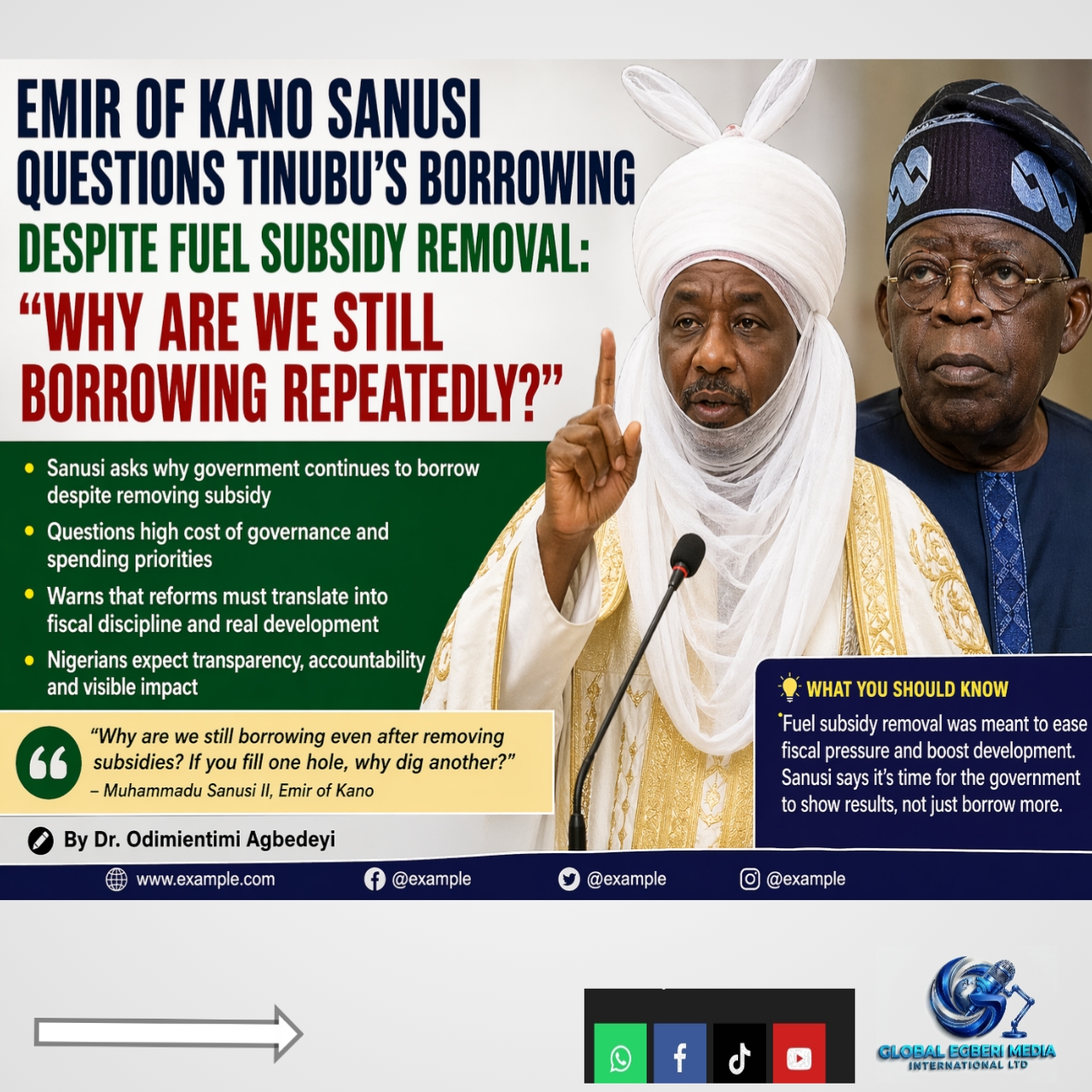
Emir of Kano Sanusi Questions Tinubu’s Borrowing Despite Fuel Subsidy Removal: “Why Are We Still Borrowing Repeatedly?”
By Dr. Odimientimi Agbedeyi
The Emir of Kano, Muhammadu Sanusi II, has raised fresh concerns over Nigeria’s continued borrowing under President Bola Ahmed Tinubu’s administration despite the removal of fuel subsidy, a policy many expected would free up billions of naira and reduce pressure on government finances.
Speaking during a public policy event in Abuja, Sanusi questioned why debt accumulation remains frequent even after one of the nation’s biggest fiscal burdens was removed.
Sanusi’s Key Question to Government
According to the former Governor of the Central Bank of Nigeria, subsidy removal was a difficult but necessary reform. However, he stressed that Nigerians deserve to see clear benefits from the painful policy.
Sanusi reportedly asked:
“Why are we still borrowing repeatedly after removing fuel subsidy?”
The remark has triggered nationwide discussion about public debt, fiscal responsibility, and the management of national resources.
Advertisement
Sponsored Post
Grow your business with Facebook and Instagram ads. Reach more customers, boost sales, and expand your brand visibility today.
Fuel Subsidy Removal and Public Expectations
When President Tinubu announced the end of fuel subsidy in May 2023, the government said the move would stop wasteful spending and redirect funds into infrastructure, education, healthcare, and security.
However, many Nigerians continue to face high transport costs, inflation, rising food prices, and economic hardship, while new borrowing figures continue to emerge.
Concerns Over Cost of Governance
Sanusi also questioned the rising cost of governance, pointing to large political appointments, official luxuries, and high recurrent expenditure.
Economic observers argue that reducing wasteful spending could significantly reduce the government’s dependence on loans.
Borrowing Without Visible Impact
Many citizens have also asked why national debt continues to rise when there is little visible improvement in electricity supply, roads, job creation, healthcare delivery, or poverty reduction.
Sanusi’s comments reflect growing public frustration over whether the gains from reforms are being properly managed.
Economists React
Several economists note that borrowing itself is not necessarily bad if funds are invested in productive sectors that generate growth and revenue.
However, borrowing for consumption, politics, or non-essential spending can create long-term financial risks and worsen future debt burdens.
Political Significance of Sanusi’s Statement
Sanusi remains one of Nigeria’s most respected voices on economic policy due to his experience as both a former central bank governor and current Emir of Kano.
His comments may increase pressure on the federal government to explain how savings from subsidy removal are being used.
Conclusion
The Emir’s question captures the heart of Nigeria’s economic debate: if painful reforms have already been implemented, why does borrowing remain the default solution?
Nigerians now expect transparency, fiscal discipline, and visible development outcomes from every sacrifice demanded by government.
By Dr. Odimientimi Agbedeyi
About the Author