
Asari Dokubo’s Voice Rekindles Hope for Edo Ijaws’ Quest for Justice
Dr. Odimientimi Agbedeyi Commends Niger Delta Leaders for Sustaining the Struggle Against Marginalization
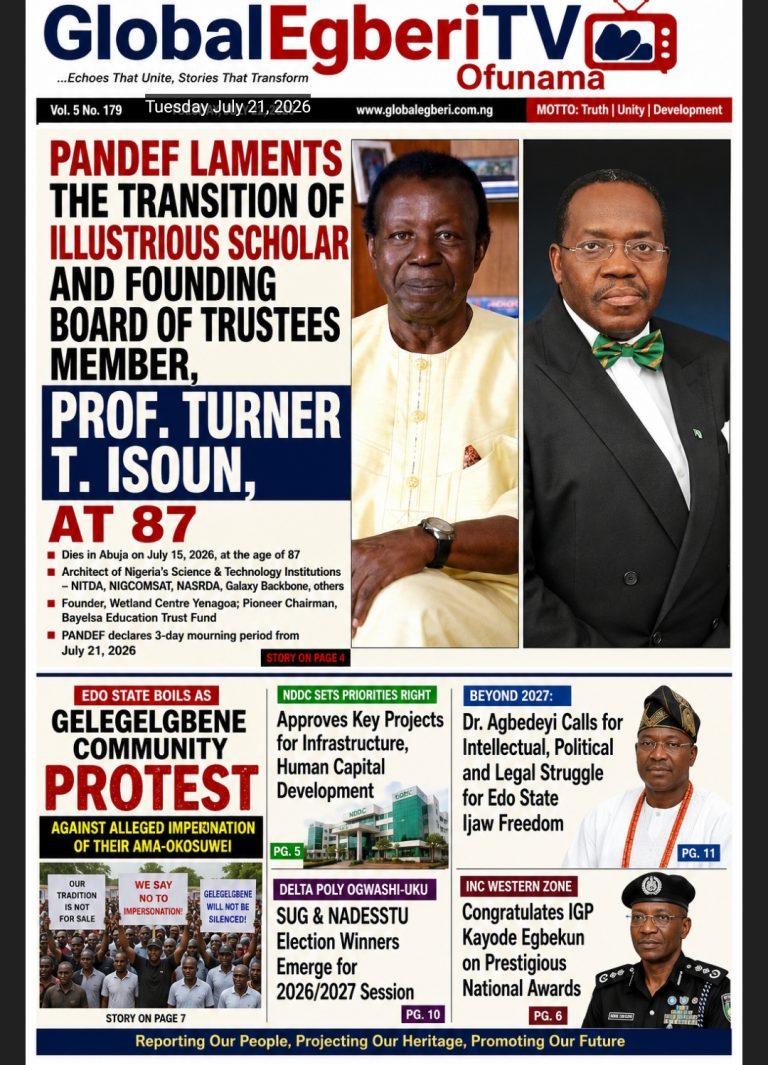
By Dr. Odimientimi Agbedeyi
The recent remarks by renowned Niger Delta leader and traditional ruler, His Royal Majesty Alhaji Asari Dokubo, Amayanabo of Torusarama-Piri, Elem Kalabari, regarding the plight of Ijaw communities in Edo State have once again brought national attention to a matter that has remained a source of concern for many indigenous Ijaw people across the state.
Speaking during the 2026 Ijaw Youth Council (IYC) Worldwide National Electoral Committee Manifesto Presentation and Debate in Degema, Rivers State, Asari Dokubo passionately called for greater recognition, development, and inclusion of Ijaw communities in Edo State. His intervention has been widely welcomed by many stakeholders who believe that the concerns of Edo Ijaws deserve urgent attention from government and relevant institutions.
For decades, indigenous Ijaw communities in Edo State have consistently maintained that they have not received the level of recognition, political representation, infrastructural development, and social inclusion that their counterparts enjoy in other Niger Delta states. Consequently, many advocates have continued to push for greater awareness of their situation and for practical measures to address longstanding grievances.
Asari Dokubo’s decision to publicly lend his voice to the issue has therefore been viewed as a significant contribution to the ongoing struggle for justice, equity, and development.
A Voice That Resonates Beyond Borders
In his address, Dokubo emphasized that the rights of Ijaw people should not be diminished simply because administrative boundaries placed some communities within Edo State rather than Delta, Bayelsa, Rivers, or Ondo States.
His observations touched on historical, cultural, and developmental issues affecting Ijaw communities and highlighted the need for a more inclusive approach to governance and development.
By drawing attention to historical records and the identity of several Ijaw settlements, Dokubo reignited conversations about the history, heritage, and legitimate aspirations of indigenous Ijaw communities in Edo State.
For many observers, his intervention serves as a reminder that the quest for justice is not merely about politics but also about preserving identity, protecting cultural heritage, and ensuring equal opportunities for all citizens.
Appreciating the Defenders of the Ijaw Cause
As an advocate for justice, equity, and development, I wish to sincerely appreciate His Royal Majesty Asari Dokubo for demonstrating courage and commitment by speaking on an issue that affects thousands of indigenous Ijaw people in Edo State.
His remarks reflect the spirit of solidarity that has historically united Ijaw people across geographical boundaries and political jurisdictions.
Beyond Asari Dokubo, appreciation must also be extended to several organizations and leaders who have consistently championed the cause of the Ijaw nation.
The Ijaw National Congress (INC) deserves commendation for its continued role as the foremost socio-cultural umbrella body defending the interests of Ijaw people across Nigeria and the diaspora.
Similarly, the Ijaw Youth Council (IYC) Worldwide has remained a critical platform for youth advocacy, leadership development, and the advancement of issues affecting Ijaw communities.
The contributions of the Egbema Youth Council (EYC) and numerous grassroots organizations across Edo State must also be acknowledged. These groups have continued to raise awareness about developmental challenges facing riverine communities while advocating for peaceful engagement and constructive dialogue.
Recognizing Other Ijaw Leaders
The struggle for the recognition and development of Edo Ijaws has also benefited from the voices and interventions of several respected Ijaw leaders, traditional rulers, community stakeholders, youth leaders, and activists who have consistently called for fairness and inclusion.
Many of these individuals have devoted years of service to ensuring that the concerns of riverine communities are not forgotten in discussions about development, political representation, and resource allocation.
Their sacrifices and unwavering commitment deserve recognition and appreciation.
A Call for Greater Inclusion
While significant progress has been made in bringing attention to the challenges facing indigenous Ijaw communities in Edo State, much work remains to be done.
Government at all levels should continue engaging community leaders, traditional institutions, youth groups, and development stakeholders in order to address issues relating to infrastructure, education, healthcare, employment, environmental protection, political representation, and economic empowerment.
Development should be inclusive, and no community should feel excluded from the benefits of governance.
The Road Ahead
The intervention by Asari Dokubo has once again demonstrated the importance of collective advocacy and responsible leadership.
As discussions continue regarding the future of indigenous Ijaw communities in Edo State, stakeholders must remain committed to peaceful engagement, constructive dialogue, and lawful advocacy.
History has shown that sustainable progress is achieved when communities work together, speak with one voice, and pursue their aspirations through unity and mutual respect.
For many indigenous Edo Ijaws, the struggle is not against any group or ethnicity but for fairness, recognition, inclusion, and equal opportunities within the Nigerian federation.
Asari Dokubo’s voice has added renewed momentum to that conversation, and for this, many will remember his intervention as a significant contribution to the ongoing quest for justice and development.
Source: GbaramatuVoice report on remarks by HRM Alhaji Asari Dokubo during the 2026 IYC Worldwide NEC Manifesto Presentation and Debate in Degema, Rivers State.
Global Egberi Media International Ltd
🌐 https://globalegberi.com.ng
Author: Dr. Odimientimi Agbedeyi
About the Author