Okomu Land Dispute: Youth President Says Ijaw Community Predates Nigerian State and National Park
By Dr. Odimientimi Agbedeyi
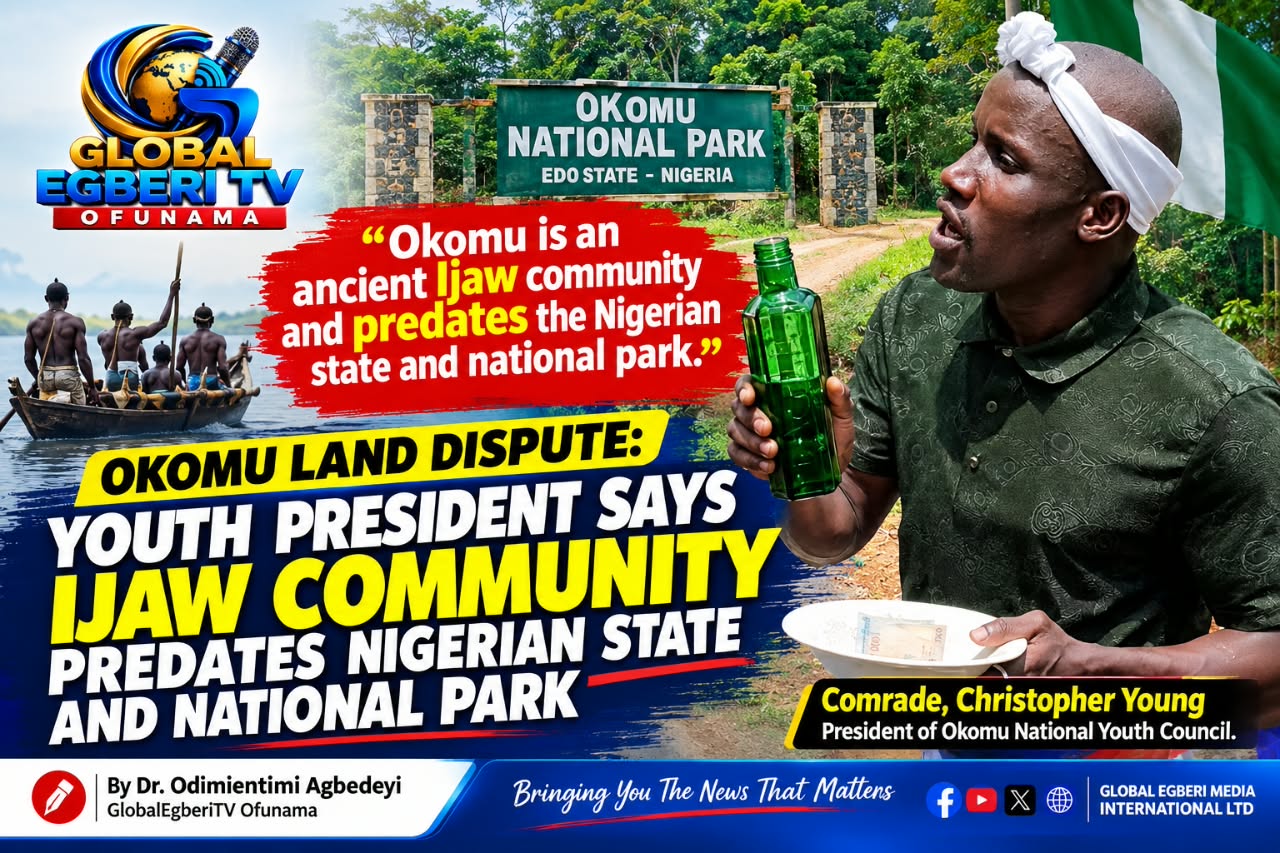
The President of the Okomu National Youth Council, Comrade Christopher Young, has rejected a viral claim that Ijaw people in Okomu are occupying government reserve land and could be evacuated, insisting that the Okomu community predates both the Nigerian state and the establishment of the area’s protected forest and national park regimes.
The claim was made by a Bini man in a viral video published on Facebook by Efos Blog, where assertions were made concerning the status of the Ijaw population in Okomu and their relationship with government-controlled land in the area.
The video has generated reactions on social media, particularly because of the longstanding disagreement among stakeholders over the history, ownership, traditional identity and political status of Okomu and other Ijaw communities in Ovia South West Local Government Area of Edo State.
Young: Okomu Predates Nigeria
Reacting to the claim, Young maintained that Okomu is an ancient Ijaw community and the headquarters of Okomu Kingdom, arguing that its existence predates the creation of Nigeria.
He further disputed any description of the Ijaw people of Okomu as tenants, settlers or people who only came into the area after government established a forest reserve or protected area.
According to Young, the historical existence of Okomu should be considered separately from subsequent government decisions concerning the classification and administration of forests and protected areas in the region.
His position is that the community and its ancestral presence existed long before the modern Nigerian state and therefore should not be portrayed as a community that emerged as a result of later government reservation of the land.
Okomu Forest Reserve Came Before the National Park
Available official records establish that the Okomu National Park was not created until 1999.
The Nigeria National Park Service states that the Okomu area was originally a forest reserve, with about 777 square kilometres gazetted in 1912 and a further 411-square-kilometre extension gazetted in 1935. The area subsequently passed through different stages of forestry and wildlife protection before becoming a national park. (Nigeria Park Service)
The Federal Government formally established Okomu National Park in 1999 through Decree 46 of 1999, now reflected in the National Park Service’s legal framework. The Park Service records May 26, 1999 as the date of the formal handover and establishment of Okomu as a national park. (Nigeria Park Service)
This historical timeline is significant to the argument being made by Young.
His position is not that the Ijaw community was created by the forest reserve or national park. Rather, he is arguing that Okomu existed as an Ijaw community before those government classifications were introduced.
However, the existence of a community before the creation of a reserve or national park does not, by itself, determine the present legal ownership or control of land. Questions concerning land title, government acquisition, traditional jurisdiction and protected-area boundaries remain matters that can be determined by relevant laws, official records and competent authorities.
Earlier Ijaw Claims Over Okomu
The argument being advanced by Young also reflects a longstanding position previously expressed by Ijaw leaders.
In 2017, Ijaw communities in Edo publicly disputed claims that they were settlers in Okomu. The Guardian reported that Ijaw communities, the Oba of Benin and the Edo State Government were then involved in disagreements over the ownership and traditional status of Okomu land. The Ijaw side argued that they were indigenous to the area, while the Benin position described them as settlers. (The Guardian Nigeria)
In the same period, Ijaw leaders cited historical accounts in arguing that Okomu and other Ijaw communities had long existed in the area. (Vanguard News)
The issue has therefore continued for years rather than emerging solely from the latest viral video.
Government Records and Community Claims
The history of the Okomu area also shows that several different legal and administrative designations have been applied to parts of the wider territory over time.
The Nigeria National Park Service states that the Okomu Forest Reserve was managed by forestry authorities before portions were de-reserved for other purposes, including the Okomu Oil Palm Project and other plantations. A wildlife sanctuary was subsequently established before the area was upgraded to national park status in 1999. (Nigeria Park Service)
The distinction is important because forest reserve, national park, government acquisition and ancestral/community claims are not necessarily the same legal category.
Consequently, while Young’s argument is that the Ijaw community existed before the Nigerian state and before the creation of the protected areas, establishing the present legal status of particular parcels of land would require reference to relevant government gazettes, land records, court decisions and other authoritative documents.
Call for Government Intervention
Young called on the Edo State Government and the Iyase of Udo to caution individuals against statements that could aggravate ethnic tension in Ovia South West.
He said public statements concerning the historical identity and land rights of communities should be handled responsibly, particularly in an area where disagreements between communities have previously generated tension.
Young maintained that the people of Okomu would continue to defend what they consider to be their ancestral interests through legitimate and lawful means.
Wider Ijaw Recognition Campaign
The controversy comes amid renewed demands by Ijaw stakeholders in Edo State for political and traditional recognition.
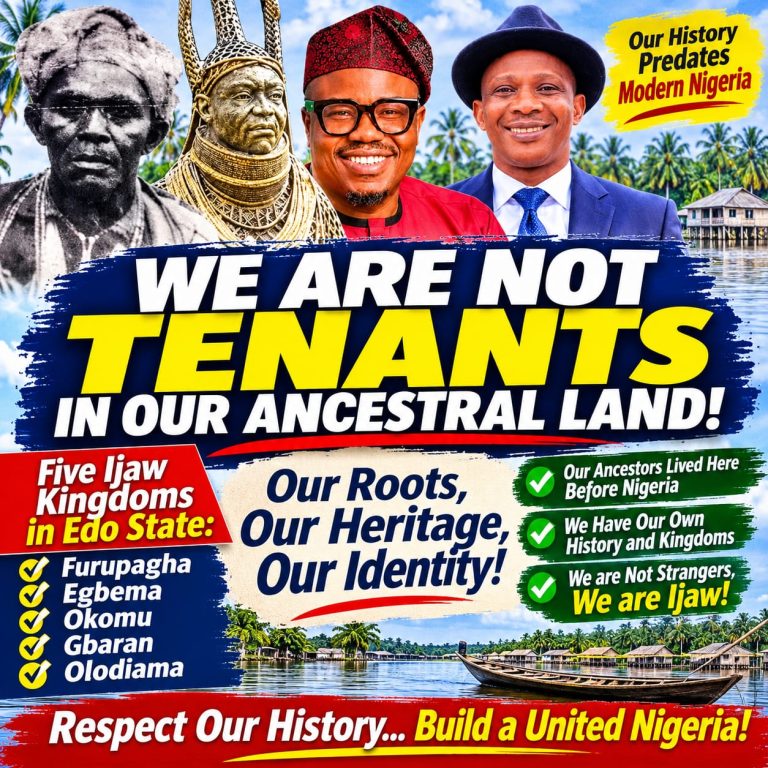
In September 2026, representatives of five Ijaw kingdoms in Edo—Egbema, Gbaraun, Okomu, Furupagha and Olodiama—renewed demands for recognition of their traditional institutions and greater political representation. (Punch Newspapers)
The development has kept questions surrounding Ijaw identity, traditional authority, political representation and land rights in parts of Edo State in public focus.
Calls for Restraint
The latest exchange has once again placed Okomu at the centre of a sensitive debate involving history, ethnicity, traditional authority and land.
While Young has strongly rejected the description of Okomu Ijaws as occupants or settlers of government reserve land, the competing historical and legal positions remain matters of dispute among stakeholders.
The latest controversy therefore reinforces calls for restraint, dialogue and reliance on verifiable historical and legal records.
For Okomu residents and other communities in Ovia South West, the immediate concern remains preventing disagreements over history and land from developing into broader ethnic confrontation.
Young’s position is that the people of Okomu will continue to pursue their claims through lawful channels, while calling on government and traditional institutions to discourage statements capable of worsening relations among communities.
By Dr. Odimientimi Agbedeyi
GlobalEgberiTV Ofunama
About the Author