PEACE TALKS BEFORE AND AFTER VICTORY: Inside the Explosive INC Election Crisis, Ogoriba Revolt, Igbadiwei Victory, and the Two Reconciliation Committees
Full Investigative Political Report
By Dr. Odimientimi Agbedeyi
[EDITORIAL DESK | EXCLUSIVE INVESTIGATION]
The dramatic leadership battle inside the Ijaw National Congress (INC) has now emerged as far more complex than a simple election dispute.
Fresh findings confirm that two separate reconciliation interventions were initiated around the controversial INC presidential election — one before the election was concluded, and another after Chief MacDonald Igbadiwei was declared winner.
These developments reveal that key stakeholders were already aware of tensions threatening the unity of the organization long before Elder T.K. Ogoriba’s explosive world press conference rejecting the process and demanding cancellation.
This means the INC crisis was not sudden.
It was building quietly behind the scenes.
[POLITICAL AFFAIRS UNIT | THE ELECTION THAT SHOOK THE IJAW NATION]
The INC presidential race had attracted unusual attention across the Niger Delta because of the organization’s importance as the umbrella socio-cultural voice of many Ijaw communities.
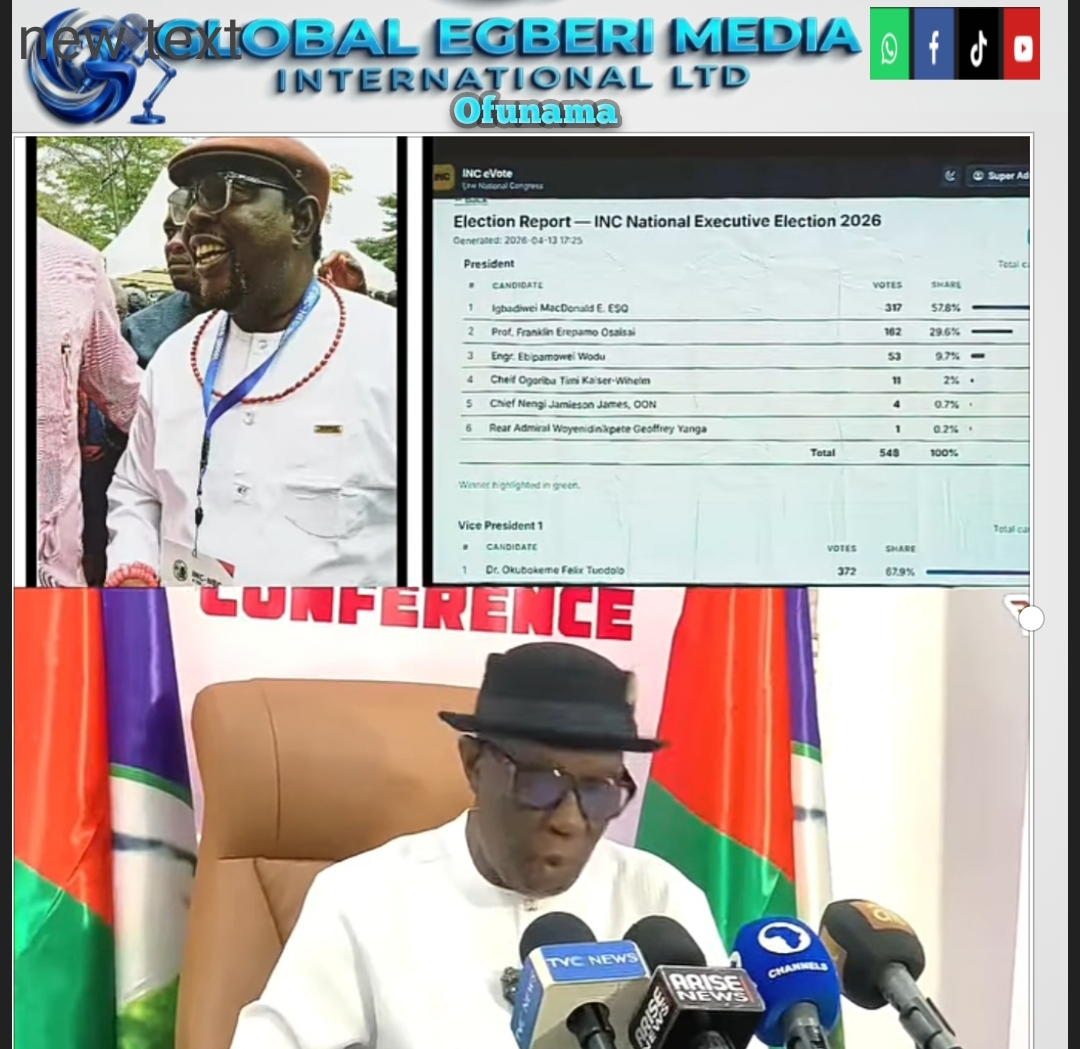
The contest eventually produced Chief MacDonald Igbadiwei as President, with reports describing the outcome as a historic moment. (Global Egberi Media International Ltd)
However, victory celebrations were quickly overshadowed by growing objections from rival interests, especially after verified video footage surfaced showing Elder T.K. Ogoriba publicly rejecting the election process.
He reportedly described the election as illegal and called for cancellation.
That declaration transformed a leadership transition into a legitimacy struggle.
[FIRST COMMITTEE | BEFORE THE RESULT WAS ANNOUNCED]
Evidence from prior reports shows that efforts to calm the crisis had already started before the election outcome was finalized.
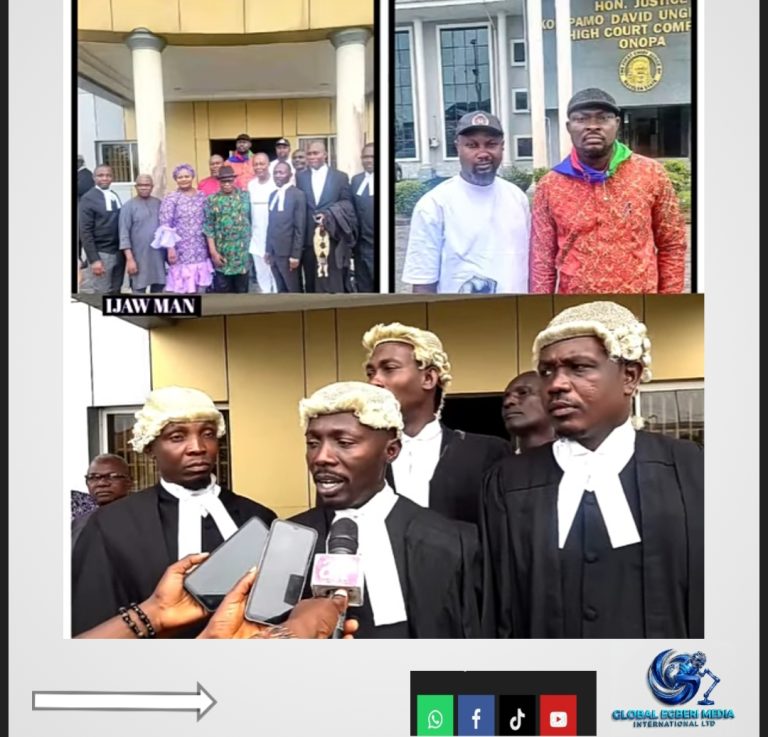
A high-level mediation process involving Bayelsa stakeholders reportedly took place in Yenagoa, where political leaders and representatives moved to address disagreements surrounding the election process.
This first intervention strongly suggests that warning signs were visible early.
Stakeholders apparently understood that if urgent action was not taken, the contest could divide the institution.
The move for peace before voting or final declaration indicates that internal complaints were already serious enough to require outside mediation.
[THE DECLARATION | IGBADIWEI EMERGES PRESIDENT]
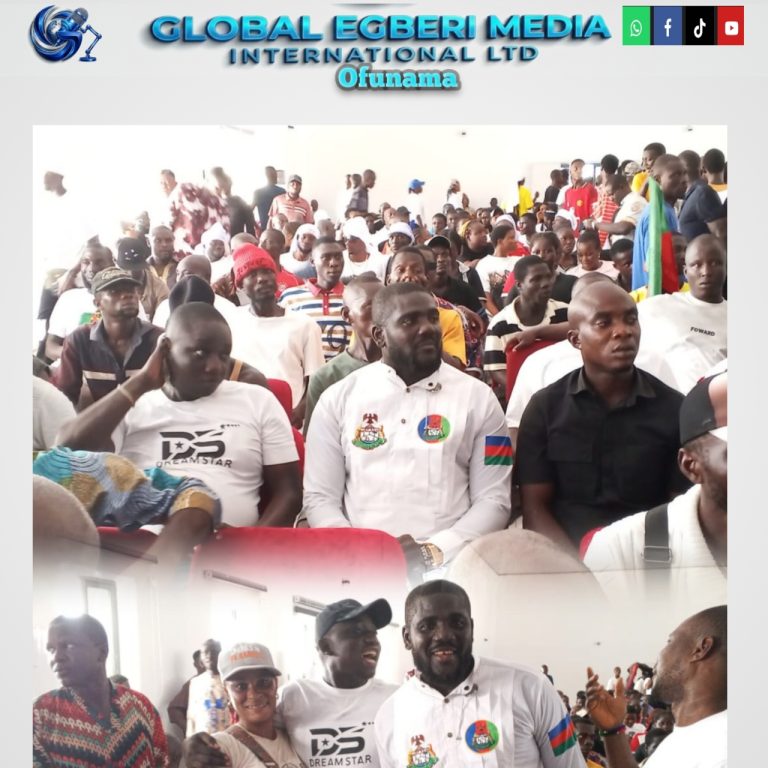
Despite controversy and calls for suspension, reports indicate that the election proceeded on April 13, 2026, and Chief MacDonald Igbadiwei emerged President of the INC. (Global Egberi Media International Ltd)
Supporters hailed the outcome as democratic progress and a fresh beginning.
To them, the organization had fulfilled its constitutional responsibility by electing new leadership.
But to critics, declaration of a winner did not automatically settle concerns over fairness and legality.
Instead, it opened a second phase of the crisis.
[SECOND COMMITTEE | AFTER WINNER WAS DECLARED]
Following the emergence of the new president, another reconciliation effort reportedly became necessary.
This second intervention came after the declaration of results, demonstrating that the first peace effort had not fully resolved core disputes.
Political observers say post-election reconciliation committees are usually created when leaders fear:
- Rejection of results
- Parallel camps forming
- Public legitimacy damage
- Court or constitutional battles
- Long-term factional division
The formation of a second peace mechanism after victory suggests that stakeholders wanted to preserve institutional unity while managing post-election anger.
[OGORIBA’S PRESS CONFERENCE | THE PUBLIC BREAKING POINT]
Then came the moment that brought everything into public view.
Verified video footage confirmed Elder T.K. Ogoriba addressed a world press conference where he openly challenged the election process and demanded cancellation.
By going public after internal tensions and reconciliation efforts, his action signaled that private mechanisms had either failed, moved too slowly, or did not satisfy his camp.
That press conference became the most visible symbol of the crisis.
No longer was the dispute whispered in corridors.
It had entered the global public domain.
[WHY TWO COMMITTEES MATTER]
The existence of both a pre-election and post-election reconciliation process changes the entire interpretation of events.
It shows:
- The dispute was anticipated before voting ended.
- Stakeholders tried to prevent escalation.
- The declaration of a winner did not close the matter.
- Unity of the INC was considered at risk.
- Major actors still believed dialogue was possible.
In political terms, this is evidence of an institution struggling to manage democratic transition under pressure.
[GLOBAL EGBERI EDITORIAL POSITION]
Global Egberi Media International Ltd believes this moment requires honesty and maturity from all parties.
Chief Igbadiwei’s emergence as president gives the organization leadership.
But leadership alone is not enough.
Unity, legitimacy, and broad confidence must still be built.
Likewise, those with grievances deserve fair hearing within constitutional boundaries.
Two reconciliation efforts show that peace remains possible if wisdom prevails.
We therefore urge:
- Immediate public communication from all sides
- Respect for the office of the president-elect/president
- Structured engagement with aggrieved camps
- Publication of agreed peace roadmap
- Avoidance of inflammatory rhetoric
- Priority for Ijaw unity above personal ambition
[WHAT HAPPENS NEXT?]
Several possible scenarios remain:
Scenario One: Successful Peace Accord
The second committee resolves tensions and all camps unite behind new leadership.
Scenario Two: Managed Opposition
Disputes continue, but within peaceful constitutional channels.
Scenario Three: Institutional Split
If mishandled, rival factions may deepen divisions.
Scenario Four: Reform Outcome
The crisis may force electoral reforms that strengthen future INC elections.
[FINAL WORD]
The story of the INC election is no longer just about who won.
It is about how an institution handled pressure, dissent, victory, and peace.
Chief MacDonald Igbadiwei has emerged.
Elder T.K. Ogoriba has challenged the process.
Two reconciliation committees have shown stakeholders know what is at stake.
Now the future depends on whether power is used to unite—or to divide.
The Ijaw Nation watches closely.
Reported by: Dr. Odimientimi Agbedeyi
Published by: Global Egberi Media International Ltd
Desk: Investigations / Niger Delta Politics
About the Author