
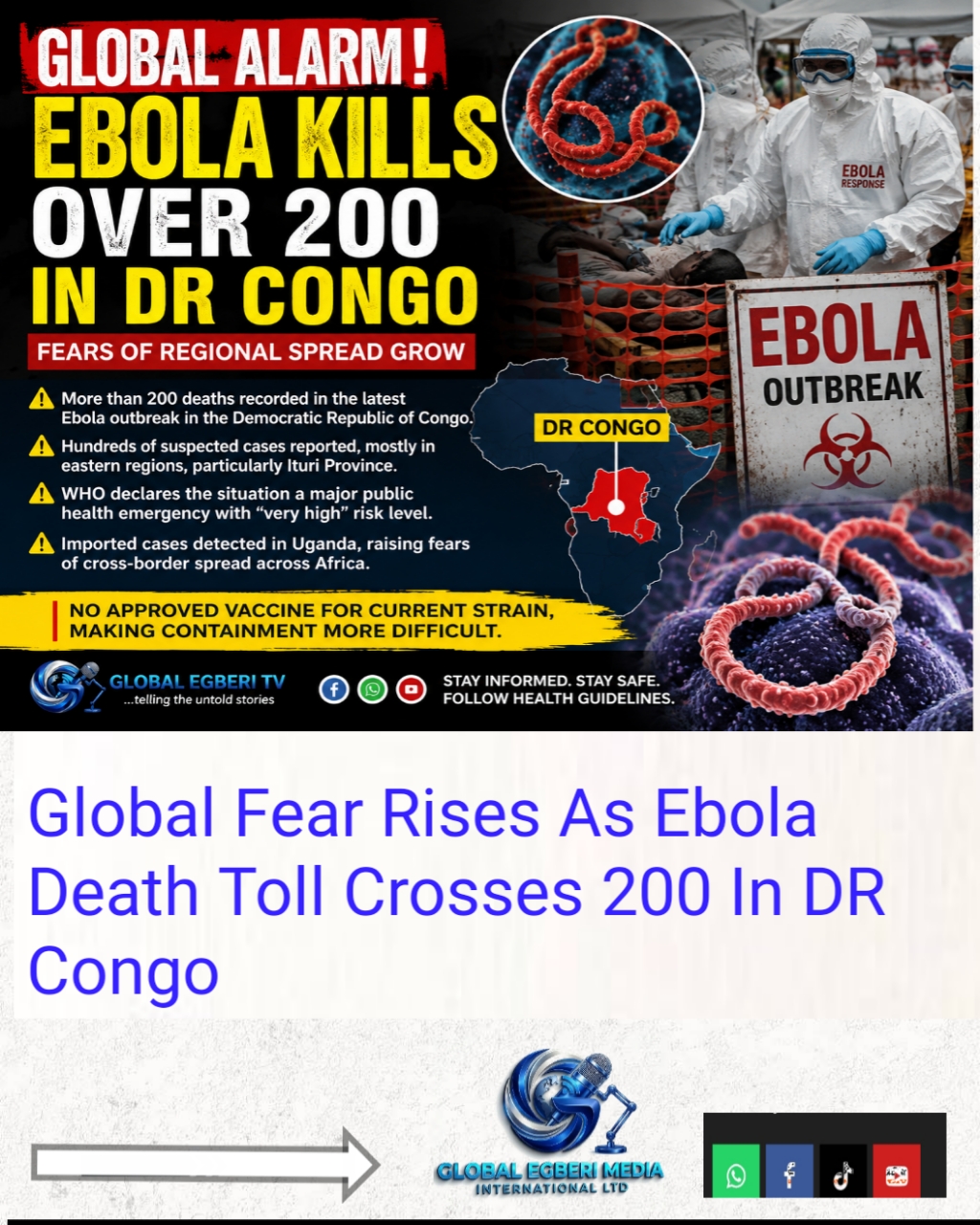
Global Fear Rises As Ebola Death Toll Crosses 200 In DR Congo
The world is once again on edge following a deadly resurgence of the Ebola virus in the Democratic Republic of Congo (DRC), where more than 200 people have reportedly lost their lives in a rapidly escalating outbreak that is now triggering fresh international concern.
Health authorities and global medical experts are warning that the situation could worsen significantly if urgent containment efforts fail to slow the spread of the deadly disease across affected communities and neighboring countries.
According to reports from international health agencies, the latest outbreak has spread aggressively through parts of eastern Congo, particularly in remote and conflict-prone areas where healthcare access remains severely limited. Medical teams on ground say hospitals and treatment centers are becoming overwhelmed as suspected infections continue to rise daily.
The World Health Organization (WHO) has reportedly described the outbreak as a major public health threat, warning that the risk level within the country is now “very high.” Officials fear that population movement, porous borders, insecurity, and misinformation among local communities could accelerate transmission beyond Congo if immediate intervention is not strengthened.
Sources indicate that hundreds of suspected infections have already been identified, while emergency health workers continue intensive contact tracing, isolation procedures, and community surveillance in an effort to stop the spread of the virus.
The current Ebola strain involved in the outbreak has reportedly raised additional concern among scientists because there is presently no fully approved vaccine specifically developed for it. This has complicated efforts to rapidly contain the disease compared to previous outbreaks where vaccination campaigns played a major role in reducing infections.
Reports also suggest that imported cases linked to the outbreak have already been detected in neighboring Uganda, increasing fears of regional transmission across Central and East Africa. Several countries are now said to be intensifying border screenings, public health monitoring, and emergency preparedness measures to prevent possible cross-border spread.
Medical experts continue to warn that Ebola remains one of the world’s deadliest viral diseases, with symptoms including high fever, weakness, vomiting, bleeding complications, and severe dehydration. The virus spreads primarily through direct contact with infected bodily fluids, making crowded communities and inadequate healthcare systems particularly vulnerable.
International aid organizations have appealed for urgent global assistance, stressing that treatment centers are struggling with shortages of medical supplies, protective equipment, and healthcare personnel. Some affected communities are also reportedly resisting medical intervention due to fear, distrust, and misinformation surrounding the disease.
Humanitarian workers say insecurity in parts of eastern Congo has made response efforts even more difficult, as armed conflict and attacks on healthcare facilities continue to threaten emergency operations in affected regions.
The Democratic Republic of Congo has experienced multiple Ebola outbreaks over the years, but global health observers fear this latest resurgence could become one of the most difficult outbreaks to contain if transmission continues at the current pace.
As panic grows across several African nations, international health agencies are urging citizens to remain calm while strictly observing public health guidelines, hygiene practices, and early medical reporting procedures.
The outbreak has once again exposed the fragile state of healthcare systems across many developing nations and renewed global conversations about epidemic preparedness, emergency funding, and international cooperation in combating deadly infectious diseases.
By Dr. Odimientimi Agbedeyi
For Global Egberi Media International Ltd
Source: Reuters / WHO / ECDC
About the Author