
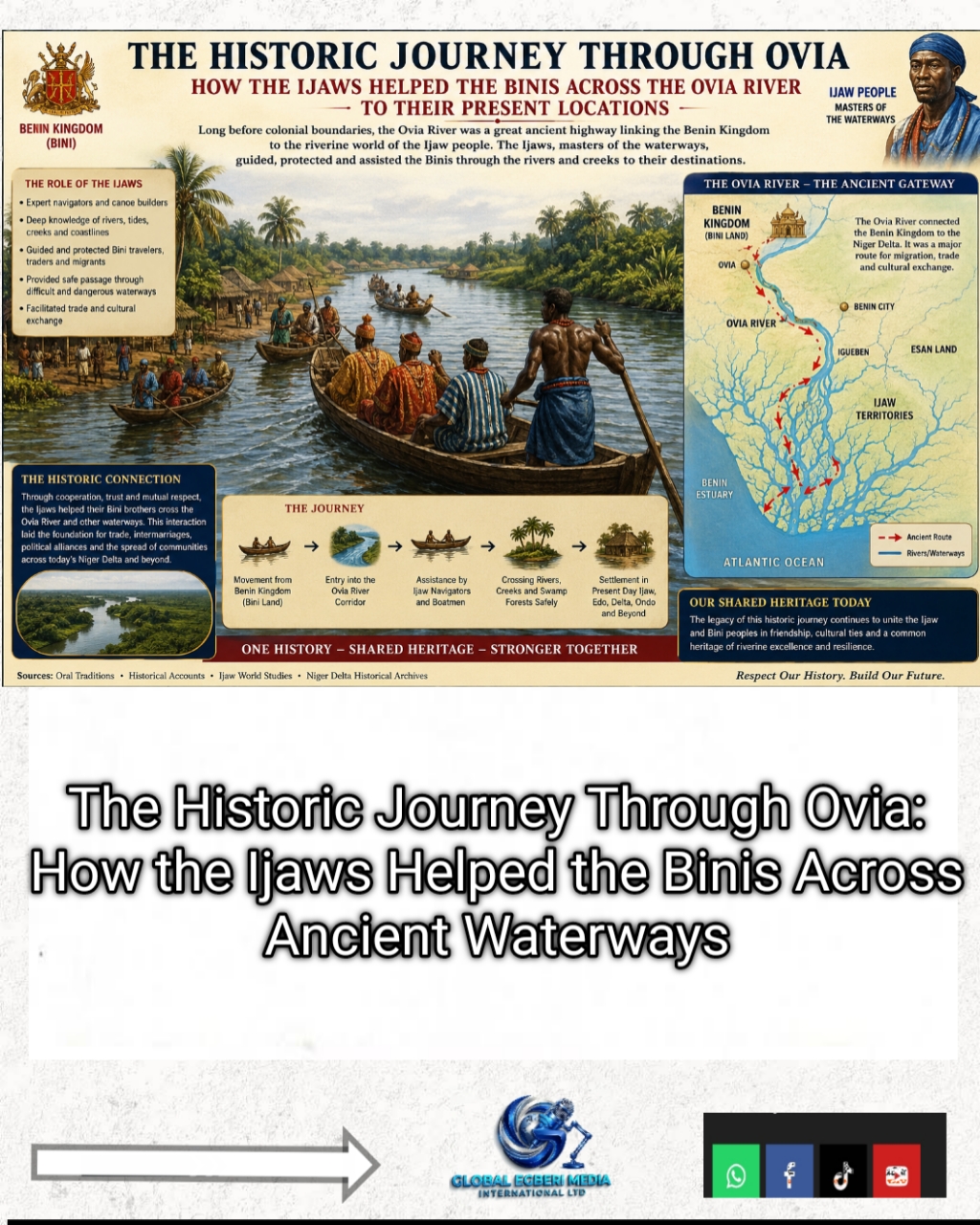
The Historic Journey Through Ovia: How the Ijaws Helped the Binis Across Ancient Waterways
Long before colonial boundaries divided present-day Nigeria into states and local governments, the forests, rivers, and creeks of the Niger Delta and Benin regions served as the great highways of ancient civilization. Among the most important of these waterways was the historic Ovia River, a vast river route that connected the Benin Kingdom to the Atlantic-facing creeks occupied by the Ijaw people.
According to several oral traditions preserved among both the Ijaws and neighboring ethnic nationalities, the ancient Ijaw people were already skilled riverine navigators long before many inland communities mastered water transportation. The Ijaws, known widely as masters of the creeks and custodians of the waterways, possessed deep knowledge of tides, rivers, estuaries, fishing channels, and canoe movement. Their settlements stretched across the coastal belt, from present-day Bayelsa to parts of Delta, Edo, Ondo, and Rivers States.
Historical narratives among Western Ijaw communities maintain that interactions between the Benin Kingdom and Ijaw settlements became stronger through trade, migration, and military cooperation. During periods of expansion and movement, sections of the Benin people reportedly depended on Ijaw navigators and canoe builders to move through dangerous swamp forests and cross difficult waterways connected to the Ovia River axis.
The Ovia River itself was not merely an ordinary river. It served as a strategic gateway linking inland Benin territories to the riverine world of the Niger Delta. Dense mangrove forests, winding creeks, and unpredictable flood channels made movement difficult for those unfamiliar with the terrain. Oral traditions hold that experienced Ijaw boatmen guided travelers, traders, and migrants through these waters using large wooden canoes carefully crafted for long-distance river movement.
Some traditions particularly among Western Ijaw clans suggest that groups migrating toward present-day settlements in Edo, Delta, and Ondo riverine communities passed through the Ovia corridor under the assistance or influence of ancient Ijaw settlements already established along the waterways. These interactions later produced centuries of trade relationships, cultural exchanges, intermarriages, and political alliances between the Ijaws and the Benin Kingdom.
The Ijaws were respected not only for their maritime skills but also for their control of coastal trade routes. As commerce expanded between the hinterland and the Atlantic coast, the waterways became economically important. Canoe routes through Ovia and adjoining rivers enabled movement of fish, salt, palm produce, and later European trade goods. In many accounts, the riverine expertise of the Ijaw people became indispensable to travelers seeking safe passage across the swampy southern terrain.
Over time, communities spread and established settlements across today’s Niger Delta region. The migration stories differ slightly from clan to clan, yet many traditions consistently emphasize the role of rivers as the lifeline of movement and survival. The Ovia River remains remembered as one of the ancient corridors through which peoples interacted, migrated, traded, and expanded their civilizations.
Today, these historical connections continue to shape cultural relationships between the Ijaw and Bini peoples. Shared traditions, linguistic influences, chieftaincy interactions, and riverine heritage still reflect memories of those early movements through the waterways of southern Nigeria.
Sources:
- Ijaw World Studies
- Niger Delta People Historical Archives
- Oral Traditions of Western Ijaw Communities
- Historical Accounts of the Ovia River Basin
About the Author