Warri Delineation: Ijaw, Urhobo Leaders Dismiss Itsekiri Claims, Insist INEC Corrected Decades of Electoral Injustice
Leaders of the Ijaw and Urhobo ethnic nationalities in Warri have firmly rejected recent claims by some Itsekiri and Agbarha Urhobo leaders regarding the Supreme Court-mandated delineation of the Warri Federal Constituency, declaring that the Independent National Electoral Commission (INEC) merely corrected decades of political exclusion and electoral imbalance affecting Ijaw communities in Warri South Local Government Area. The leaders further maintained that President Bola Ahmed Tinubu never directed any alteration of electoral ward names in Warri South, insisting that the recent delineation exercise was carried out in accordance with the Supreme Court judgment, historical records, and established demographic realities that recognize the Ijaw people as an integral component of Warri South LGA.
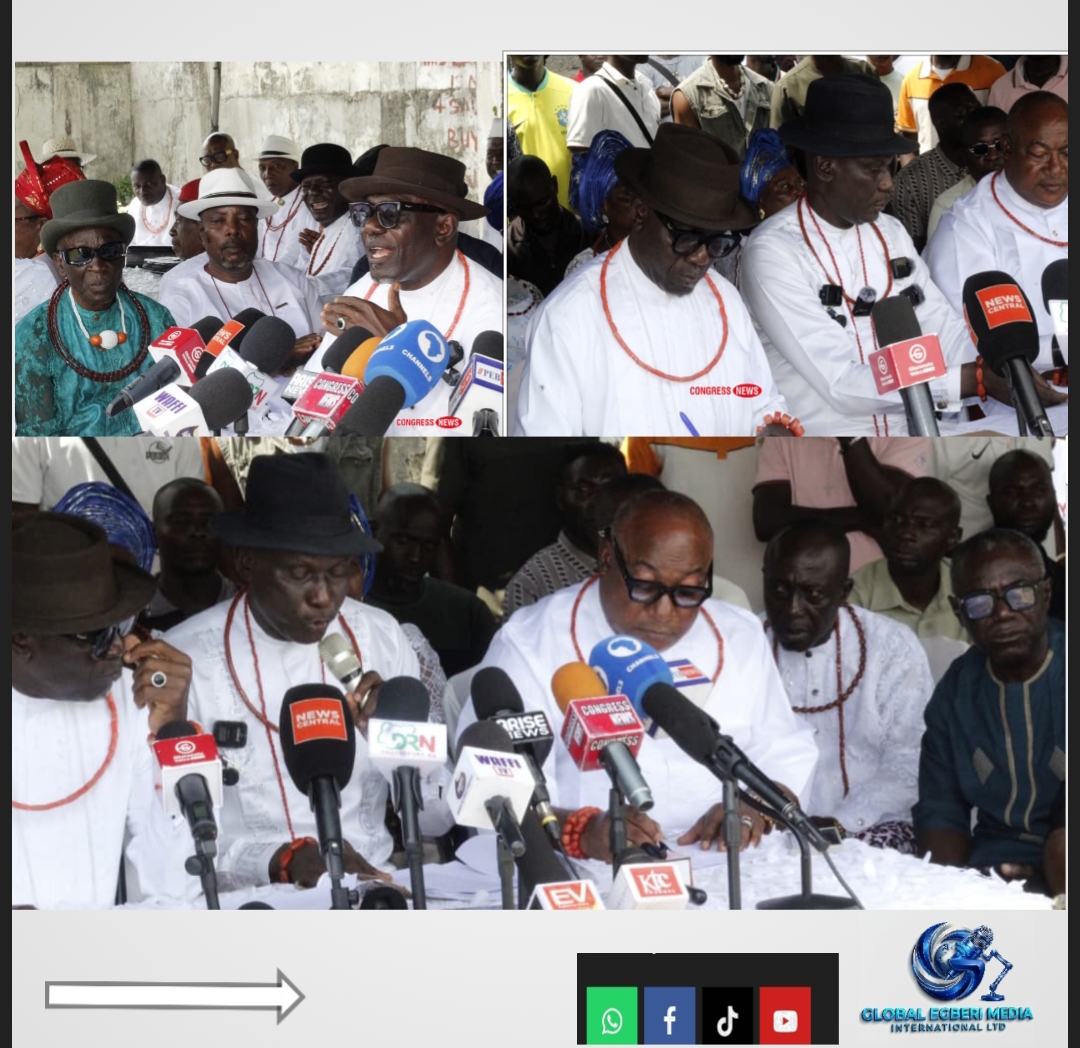
Addressing journalists in Warri on Wednesday, the leaders described a June 19, 2026 statement issued by some Itsekiri and Agbarha Urhobo leaders as misleading and capable of creating unnecessary tension, alleging that the statement contained distortions regarding the composition of electoral wards, stakeholder agreements, and the historical presence of Ijaw communities in Warri South Local Government Area.
Tinubu’s Intervention Did Not Cover Warri South Ward Names
The leaders clarified that President Tinubu’s intervention was limited to issues concerning Warri South West Local Government Area and the broader framework for equitable power-sharing among the Ijaw, Itsekiri, and Urhobo ethnic nationalities across the Warri Federal Constituency.
According to them, at no time did the President instruct INEC to alter, remove, or rename electoral wards and registration areas in Warri South LGA.
They noted that agreements reached through stakeholder consultations following the President’s intervention had already been reflected in INEC’s final delineation report released on June 16, 2026, which effectively concluded the Supreme Court-ordered exercise.
The leaders therefore commended INEC for implementing both the Supreme Court judgment and the consensus agreements reached by stakeholders.
Allegation of Obstruction During Power-Sharing Negotiations
The Ijaw and Urhobo leaders further alleged that efforts to implement the President’s directive on equitable power-sharing within Warri South LGA were frustrated by representatives of the Itsekiri ethnic nationality during mediation meetings held at the Office of the National Security Adviser in Abuja on June 12, 2026.
They insisted that the Federal Government’s directive covered all positions within the Warri Federal Constituency, including Warri Federal Constituency I, and was not restricted to any proposed constituency arrangement.
According to them, the participation of prominent Urhobo leaders, including Olorogun Victor Okumagba and Chief Westham Adehor, in the negotiations was based on this understanding.
The leaders alleged that Urhobo interests were sidelined during the process and criticized some members of Agbarha Kingdom for what they described as collaboration with forces seeking to perpetuate political dominance in Warri South.
Ijaws Have Always Been Part of Warri South
Rejecting claims that there are no indigenous Ijaw communities in Warri South LGA, the leaders described such assertions as historically inaccurate and repeatedly disproved by official investigations and stakeholder engagements.
They recalled that during INEC stakeholder meetings held in Asaba on March 21, 2024, and Warri on July 8, 2024, representatives of all three ethnic nationalities acknowledged intelligence reports, physical settlements, and existing polling structures confirming the presence of Ijaw communities within Warri South.
According to them, these findings informed INEC’s field operations and eventually led to the creation of the Ewein, Bulou-Ama (GRA II), and Ogbe-Ijoh Warri Urban electoral wards.
The leaders emphasized that these wards are located within established Ijaw communities and were identified through independent field verification exercises.
Historical Records Validate Ijaw Presence
The leaders argued that historical and legal records have consistently recognized the Ijaw people as stakeholders within Warri South LGA.
They cited the Western Region Laws of Nigeria No. 177 of 1955, which established autonomous electoral wards for Ijaw communities within Warri Township, including Alders Town B3, Ogbe-Ijoh Ward C1, Ogbe-Ijoh Ward C2, and Government Area F1.
According to them, these wards formed part of the electoral structure used during the 1963 national census and local government administration before later political restructuring fragmented the Ijaw voting population and diminished their representation.
They maintained that the recent delineation exercise merely restored historical realities and corrected decades of political imbalance.
Call for Peace and Full Implementation
The leaders called on the Federal Government, INEC, and relevant stakeholders to proceed with the implementation of the final delineation report ahead of the 2027 general elections.
They also appealed for a special voter registration exercise across newly created polling units and registration areas within the Warri Federal Constituency to ensure that eligible residents are not disenfranchised and can fully participate in future elections.
While reaffirming their commitment to peaceful coexistence among the ethnic nationalities of Warri, the leaders urged all parties to embrace dialogue, respect lawful processes, and allow the delineation exercise to serve as a foundation for fairness, inclusion, and sustainable peace in the region.
About the Author