
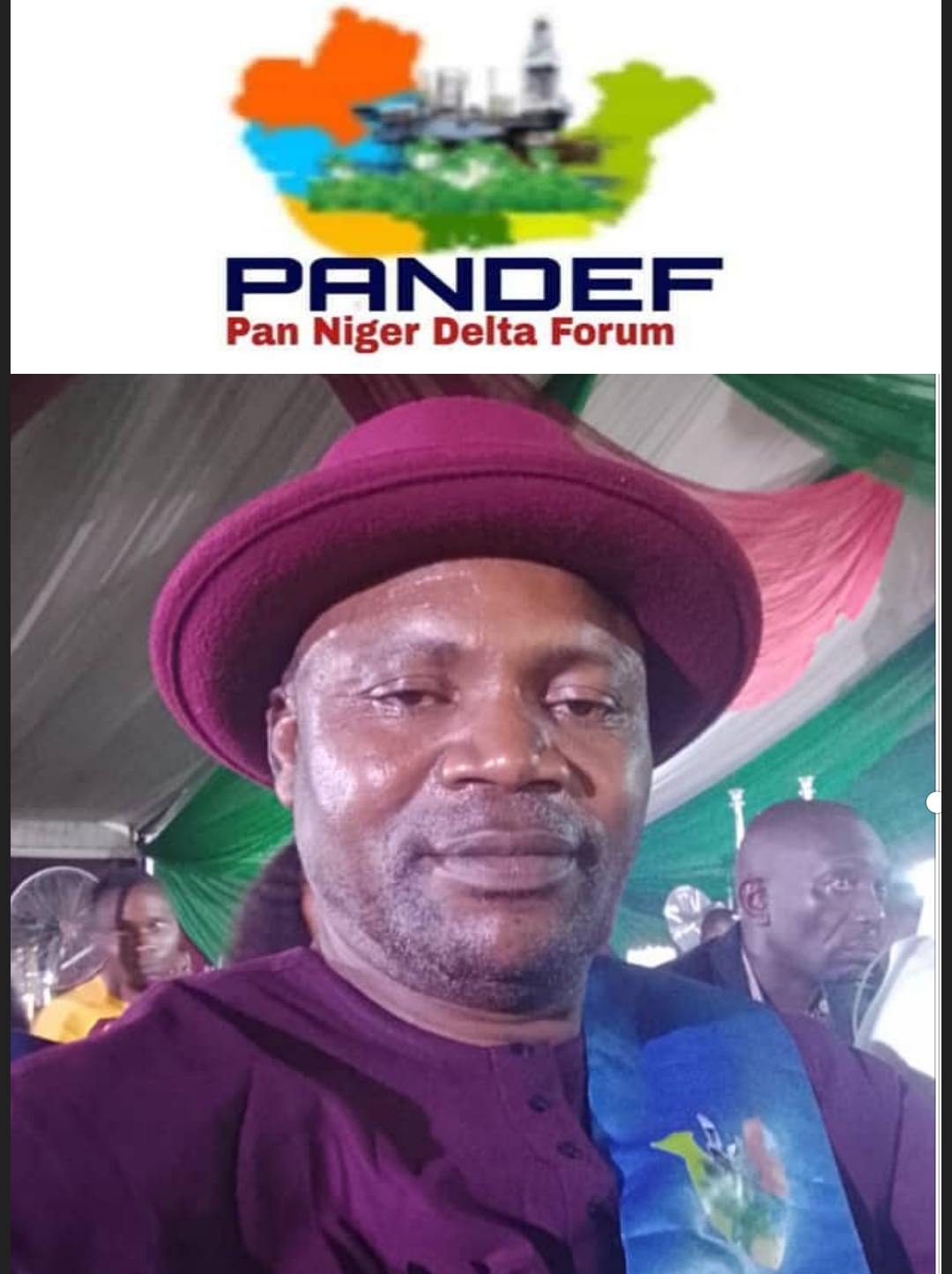
PANDEF National Youth Leader Donben Donyegha Decries South-South Road Collapse, Demands Urgent Federal Intervention
By Dr Odimientimi Agbedeyi
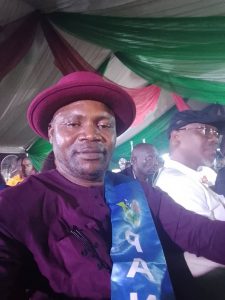
The National Youth Leader of the Pan Niger Delta Forum (PANDEF), Chief Hon. Engr. Donben Donyegha, has expressed deep displeasure over the deteriorating condition of major roads across the South-South region, warning that continued neglect of critical infrastructure could further deepen the frustration and hardship being experienced by residents and commuters.

Donyegha said it was unacceptable that a region that contributes substantially to Nigeria’s economic survival through its oil and gas resources should continue to suffer from deplorable roads, inadequate transportation infrastructure and what he described as insufficient government attention.
According to him, several major highways connecting communities, commercial centres and oil-producing areas across the South-South have deteriorated to the point where travelling between communities has become increasingly difficult, time-consuming and dangerous.
He particularly described the East-West Road as an “eyesore,” arguing that the condition of the strategic highway does not reflect its importance to the Niger Delta and the Nigerian economy.
He also raised concerns over the Calabar–Itu Road, which he described as virtually a write-off, while highlighting the difficulties commuters face on several major routes in Edo State and other parts of the South-South.
Among the roads he identified are the Benin–Sapele Road, Benin–Agbor Road and Benin–Auchi Road, all of which, he said, have become sources of hardship for commuters and businesses.
He further called attention to the Benin–Udo–Ofunama Road, a critical route linking several oil-bearing communities in Ovia South-West Local Government Area of Edo State.
According to Donyegha, the Benin–Gelegele Road, which provides access to Gelegele, an oil-producing community in Ovia North-East Local Government Area of Edo State, also requires urgent attention.
He listed other roads of concern to include the Benin–Abraka Road, Oluku–Agboma Road, Upper Sakponba Road and the Sapele Road bypass, which he said are in poor condition.
The PANDEF youth leader also identified the Benin–Oben Road, linking Benin City to Oben, an oil-producing community in Edo State, and the Benin–Ologbo Road, connecting to Ologbo, an oil-producing community in Ikpoba-Okha Local Government Area of Edo State, as roads requiring urgent government intervention.
Donyegha maintained that the continued deterioration of these roads is not merely an inconvenience to motorists but a major economic and social problem capable of affecting the movement of people, agricultural products, petroleum-related equipment, goods and essential services.
He argued that communities that contribute resources to the national economy should not be condemned to decades of inadequate infrastructure.
“Those who produce the resources used in running the Nigerian economy should not be made to suffer because of bad roads,” he said, stressing that the South-South region deserves infrastructure commensurate with its strategic contribution to Nigeria.
Call for immediate intervention
Donyegha called on President Bola Ahmed Tinubu and the governors of the South-South states to treat the deteriorating road network as an emergency requiring coordinated intervention.
He warned that the frustration among citizens is growing and that political leaders should not underestimate the consequences of continued neglect of basic infrastructure.
He said the hardship experienced by ordinary Nigerians on the roads could eventually become a major political issue, particularly as political parties and elected officials begin preparations for future elections.
According to him, the people should not be expected to accept promises indefinitely while travelling through roads that have remained in deplorable conditions.
Threat of coordinated youth mobilisation
Expressing the growing frustration among youths in the region, Donyegha warned that failure by the authorities to address the situation could lead to large-scale youth mobilisation across the South-South.
He said youths could be mobilised to demand attention to the region’s infrastructure challenges and warned of possible protests targeting strategic transportation facilities, including airports across the region.
However, such actions, if pursued, would need to remain peaceful and lawful, with the protection of lives, property and the rights of travellers preserved.
The statement underscores the increasing frustration among sections of the Niger Delta over what they perceive as inadequate infrastructure despite the region’s contribution to national revenue.
Demand for reopening of South-South seaports
Donyegha also renewed the call for the immediate reopening and full operationalisation of seaports in the South-South region.
He argued that functional seaports would improve economic activity, create employment opportunities, facilitate international trade and reduce pressure on road transportation.
According to him, the region should not continue to watch economic opportunities pass through other parts of the country while communities in the oil-producing areas struggle with inadequate infrastructure.
He therefore urged the Federal Government to take practical steps toward ensuring that ports in the South-South are fully operational and positioned to contribute meaningfully to the national economy.
Call for relocation of IOC headquarters to Niger Delta
Another major demand contained in Donyegha’s position is the relocation of the headquarters of International Oil Companies, IOCs, operating in the Niger Delta to the region.
He argued that oil companies should have their operational headquarters closer to the communities and environments where they conduct their primary activities.
According to him, relocating IOC headquarters to the Niger Delta would increase economic opportunities in the region, create jobs, stimulate local businesses and improve interaction between oil companies and host communities.
He called on the Federal Government to facilitate the process and ensure that oil-producing communities are not merely extraction points but also beneficiaries of the economic activities generated by the industry.
Political consequences
Donyegha further warned that the condition of infrastructure in the South-South could have consequences for politicians seeking electoral support from the region.
He appealed to President Tinubu and South-South governors to address the concerns of the people before the next elections, stressing that voters are increasingly interested in tangible development rather than political promises.
He argued that vote buying cannot permanently resolve the problems confronting Nigerians, insisting that citizens require functional roads, healthcare, education, employment opportunities, security and other basic amenities.
According to him, the political environment should no longer be treated as “business as usual,” as voters are becoming more conscious of the relationship between their votes and the performance of elected officials.
A broader Niger Delta concern
The concerns raised by the PANDEF National Youth Leader come against the backdrop of long-standing demands by stakeholders in the Niger Delta for improved infrastructure, greater economic opportunities, environmental protection and increased participation in the region’s oil and gas economy.
For communities located in remote oil-producing areas, roads are often more than transportation routes. They provide access to schools, hospitals, markets, farms, businesses and security services.
The deterioration of such roads can therefore have consequences far beyond transportation, affecting virtually every aspect of community life.
Stakeholders across the region are expected to continue pressing federal and state authorities to provide sustainable solutions to the infrastructure deficit.
The Federal Government and relevant state governments now face renewed calls to move beyond assurances and develop a coordinated programme for the rehabilitation and maintenance of strategic South-South road corridors.
For residents of the region, the expectation is straightforward: roads linking communities, economic centres and oil-producing areas should be motorable, safe and maintained consistently.
As Chief Hon. Engr. Donben Donyegha’s intervention highlights, the South-South question is not simply about roads. It is also about equity, economic inclusion, development and whether communities that contribute significantly to Nigeria’s national wealth can receive infrastructure capable of supporting their own growth.
Global Egberi Media International Ltd will continue to monitor developments surrounding the condition of major roads across the Niger Delta and the response of the Federal Government and South-South governors to these demands.
Source: Statement attributed to Chief Hon. Engr. Donben Donyegha, National Youth Leader, PANDEF.
Website: globalegberi.com.ng/wp
About the Author