Tinubu Steps Into Warri’s Historic Crossroads, Seeks Lasting Peace Among Ijaw, Urhobo and Itsekiri
President’s Intervention Rekindles Hope for Equitable Resolution of Longstanding Delineation Dispute
By Dr. Odimientimi Agbedeyi
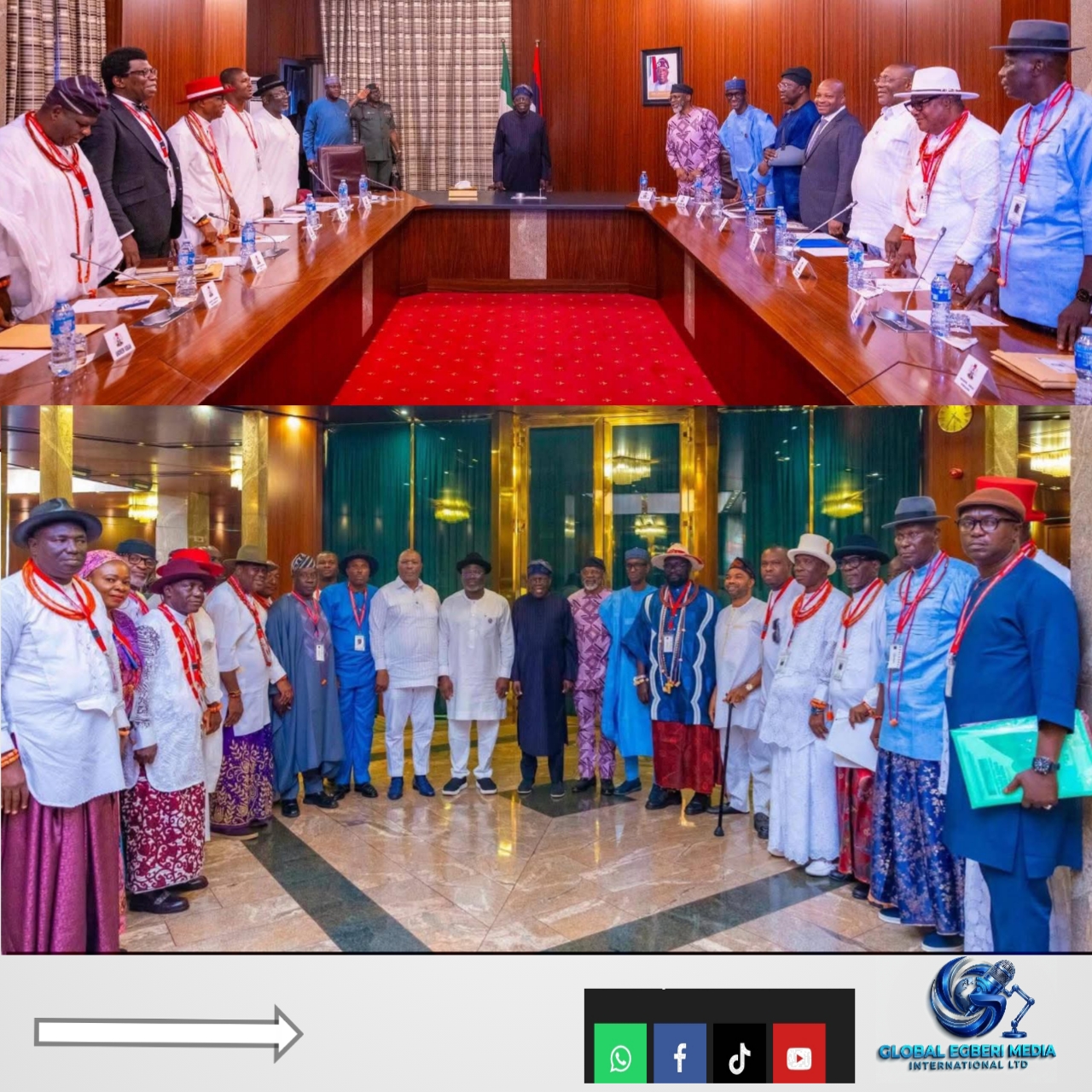
In a development widely regarded as a defining moment in the quest for peace and political stability in Delta State, President Bola Ahmed Tinubu has personally intervened in the protracted Warri delineation dispute, convening a high-level meeting with leaders of the Ijaw, Urhobo, and Itsekiri ethnic nationalities in a bold effort to foster dialogue, mutual understanding, and lasting reconciliation.
The meeting, which assembled influential stakeholders from the three major ethnic blocs of the Warri Federal Constituency, marks one of the most significant federal interventions in recent years regarding a matter that has long occupied the centre stage of political discourse and communal relations in the Niger Delta.
For decades, questions surrounding electoral delineation, ward boundaries, political representation, and demographic realities have remained deeply contentious issues among the affected communities. The complexities of the dispute have often transcended electoral considerations, touching upon sensitive questions of identity, history, territorial legitimacy, and access to political opportunities.
Against this backdrop, President Tinubu’s decision to engage the principal stakeholders directly has been welcomed by political analysts, traditional institutions, civil society organizations, and peace advocates as a demonstration of statesmanship and proactive leadership.
A Gathering of History, Responsibility and Hope
Inside the meeting chamber, representatives of the Ijaw, Urhobo, and Itsekiri nationalities reportedly presented their respective concerns, positions, and grievances regarding the ongoing delineation exercise.
The atmosphere, according to sources familiar with the deliberations, was characterized by frank discussions, careful listening, and a shared acknowledgment of the importance of preserving peace in one of Nigeria’s most strategically significant regions.
President Tinubu underscored the necessity of constitutionalism, dialogue, and adherence to democratic principles as the foundation upon which any sustainable resolution must be built.
The President reportedly reminded participants that the strength of Nigeria’s democracy lies not in the absence of disagreements but in the nation’s ability to resolve differences through lawful, peaceful, and inclusive mechanisms.
His message was both simple and profound: peace must prevail over provocation, and national unity must triumph over sectional interests.
The Imperative of Fairness and Justice
Central to the President’s intervention was a reaffirmation of the Federal Government’s commitment to fairness, equity, transparency, and justice.
The delineation controversy has generated extensive debates due to concerns over electoral representation and the implications of boundary adjustments on political participation, governance structures, and resource distribution.
Recognizing the sensitivity of these concerns, President Tinubu assured stakeholders that the Federal Government remains committed to ensuring that all legitimate grievances are addressed within the framework of the law and the Constitution.
His reassurance has been interpreted as an attempt to strengthen public confidence in democratic institutions while discouraging actions capable of inflaming existing tensions.
For many observers, the emphasis on fairness is particularly significant because it acknowledges the legitimate aspirations and concerns of all parties without prejudging the outcome of ongoing consultations.
Warri: A Microcosm of Nigeria’s Diversity
The Warri Federal Constituency occupies a unique place in Nigeria’s sociopolitical landscape.
Blessed with immense economic significance and cultural diversity, the area has historically served as a meeting point of various ethnic nationalities whose destinies have become deeply intertwined over generations.
The Ijaw, Urhobo, and Itsekiri peoples have collectively contributed to the social, economic, and political development of the region. Yet, historical disagreements over boundaries and representation have periodically tested communal relations.
Many analysts believe that the successful resolution of the current dispute could become a model for addressing similar challenges elsewhere in Nigeria.
By bringing all stakeholders to the same table, the President has reinforced the principle that dialogue remains the most effective instrument for conflict resolution in a democratic society.
Placing Regional Development Above Ethnic Rivalries
One of the most compelling aspects of President Tinubu’s message was his appeal for stakeholders to prioritize the broader interests of the Niger Delta above ethnic, partisan, or sectional considerations.
He emphasized that sustainable development cannot flourish in an atmosphere of mistrust and confrontation.
The Niger Delta remains one of Nigeria’s most resource-rich regions, yet its developmental aspirations can only be fully realized when peace, cooperation, and social harmony prevail.
The President’s call serves as a reminder that the region’s future prosperity depends not on perpetual contests for dominance but on collaborative efforts to advance the collective welfare of all communities.
A New Chapter of Consultations
Beyond the immediate meeting, President Tinubu reportedly directed relevant agencies and institutions to sustain consultations with community leaders and other stakeholders.
This directive suggests that the administration intends to pursue a comprehensive and participatory process rather than impose a unilateral solution.
Political observers argue that continuous engagement is essential for building trust and ensuring that every affected community feels adequately represented in the resolution process.
Such an approach aligns with global best practices in conflict management, where inclusivity and sustained dialogue often yield more durable outcomes than adversarial methods.
The Road Ahead
While the Warri delineation issue remains unresolved, the President’s intervention has undeniably altered the trajectory of the conversation.
The willingness of all parties to engage constructively offers a glimpse of optimism in a matter that has often generated anxiety and uncertainty.
The coming weeks and months will undoubtedly test the resolve of stakeholders to remain committed to dialogue and peaceful engagement.
However, the signals emerging from the meeting suggest a growing recognition that lasting peace is both possible and necessary.
For the people of Warri and the wider Niger Delta region, the moment represents more than a political consultation; it symbolizes an opportunity to replace suspicion with understanding, rivalry with cooperation, and division with shared progress.
As consultations continue, Nigerians will be watching closely, hopeful that wisdom, justice, and statesmanship will ultimately prevail.
If successful, President Tinubu’s intervention may well be remembered as the turning point that transformed a longstanding source of contention into a pathway toward enduring peace, strengthened democratic participation, and renewed regional harmony.
Source: Stakeholders’ briefing on President Tinubu’s meeting with Ijaw, Urhobo, and Itsekiri leaders regarding the Warri delineation dispute.
Global Egberi Media International Ltd
https://globalegberi.com.ng
Author: Dr. Odimientimi Agbedeyi
About the Author