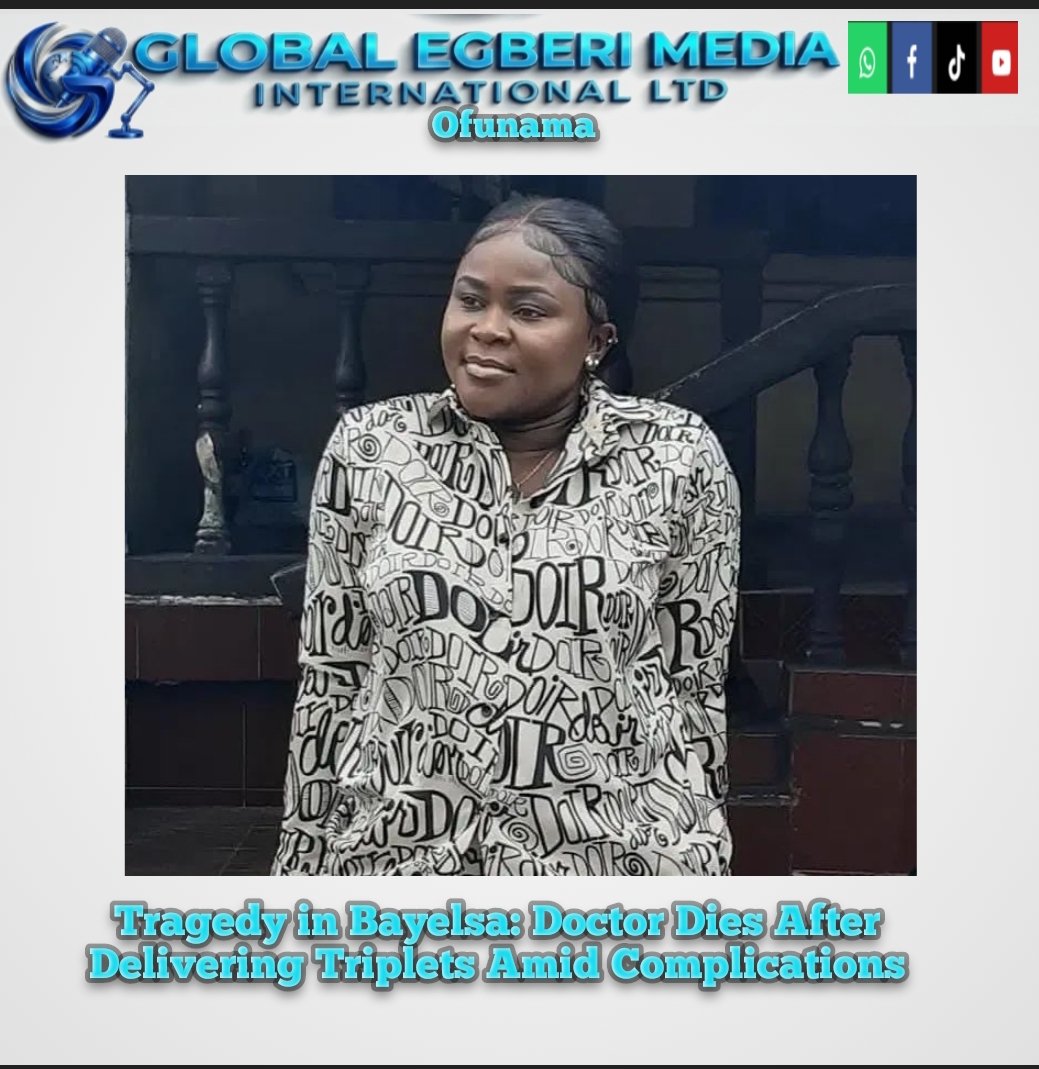
Tragedy in Bayelsa: Doctor Dies After Delivering Triplets Amid Complications
A wave of grief has swept across Bayelsa State and the Nigerian medical community following the tragic death of a young medical doctor, Dr. Ere Ogbachi, who reportedly died shortly after giving birth to triplets.
The heartbreaking incident, which occurred in Yenagoa, has sparked widespread reactions, raising concerns about maternal health risks—even among trained healthcare professionals.
A Joyful Moment Turns Into Tragedy
According to multiple reports, Dr. Ogbachi successfully delivered triplets at the Niger Delta University Teaching Hospital (NDUTH) in Okolobiri. What should have been a moment of celebration quickly turned into a medical emergency. (Punch Newspapers)
Shortly after delivery, complications reportedly set in, forcing her immediate transfer to the Intensive Care Unit (ICU) of the Federal Medical Centre (FMC) in Yenagoa. (Punch Newspapers)
Despite frantic efforts by medical personnel to stabilize her condition, her health deteriorated rapidly. She was pronounced dead in the early hours of April 14, 2026, at about 2:45 a.m. (Punch Newspapers)
Family Recounts Final Moments
The family of the deceased, through a statement by her brother, painted a deeply emotional picture of her final hours.
They disclosed that doctors and emergency responders fought tirelessly to save her life, but her condition worsened significantly. Her oxygen levels reportedly dropped drastically during the intervention, signaling a critical decline. (Punch Newspapers)
In a touching tribute, the family described her as “a fighter to the end,” expressing deep sorrow over what they termed a devastating and irreplaceable loss.
A Life of Service Cut Short
Until her untimely death, Dr. Ogbachi was a registrar at NDUTH, a member of the Nigerian Medical Association (NMA), and a graduate of the Niger Delta University. (Punch Newspapers)
She was not only a healthcare professional but also a new mother whose life had just entered a new phase filled with promise and responsibility.
Colleagues and acquaintances have described her as dedicated, hardworking, and deeply committed to saving lives—a tragic irony given the circumstances of her passing.
Medical Questions and Public Concerns
While the exact nature of the complications that led to her death has not been officially disclosed, the incident has reignited conversations around maternal mortality, emergency obstetric care, and the preparedness of healthcare facilities in Nigeria.
Maternal complications following childbirth—especially in multiple births such as triplets—can include severe hemorrhage, embolism, hypertensive disorders, or respiratory complications. Experts note that such cases require highly coordinated and rapid-response care systems.
However, the absence of an official statement from hospital authorities as of the time of reporting has left room for speculation and concern among the public. (Punch Newspapers)
Shock Across the Medical Community
The death of a medical doctor under such circumstances has sent shockwaves across the healthcare sector.
Many have taken to social media and professional platforms to express grief, noting that if a trained medical practitioner could succumb to childbirth complications, it highlights the persistent vulnerabilities within the system.
Healthcare workers, advocacy groups, and concerned citizens are now calling for a thorough investigation into the incident, as well as systemic improvements to maternal healthcare services across the country.
A Nation Reflects on Maternal Health Realities
Nigeria continues to rank among countries with high maternal mortality rates, despite efforts by government and health organizations to address the issue.
This tragic incident underscores a painful reality: childbirth, while natural, remains a high-risk process in many parts of the country due to gaps in infrastructure, emergency response systems, and access to quality care.
Editorial: A Wake-Up Call Nigeria Cannot Ignore
The death of Dr. Ere Ogbachi is not just a personal tragedy—it is a national alarm.
When a trained doctor, surrounded by colleagues and within a hospital setting, cannot survive childbirth complications, it raises urgent and uncomfortable questions. What then becomes the fate of ordinary Nigerian women in rural areas, with limited access to healthcare facilities?
This incident must not be treated as just another headline.
It should compel policymakers, health authorities, and stakeholders to re-evaluate the state of maternal healthcare in Nigeria. Investments must go beyond rhetoric. There is a pressing need for:
- Improved emergency obstetric care systems
- Better-equipped intensive care units across hospitals
- Continuous training for healthcare personnel
- Strengthened referral systems
- Increased funding and monitoring of maternal health programs
Equally important is accountability. If lapses occurred—whether systemic or human—they must be identified and addressed to prevent future occurrences.
The loss of Dr. Ogbachi is a painful reminder that no one is immune to systemic weaknesses. Her death should not be in vain.
Let it spark reform. Let it drive urgency. Let it save lives.
Conclusion
As the family mourns and the medical community reflects, Nigeria stands at a crossroads.
Will this tragedy fade into silence… or will it ignite meaningful change?
The answer will determine not just the legacy of Dr. Ogbachi, but the future of maternal healthcare in the nation.
Source: Punch Newspapers / Vanguard Nigeria / Tribune Online
Homepage: https://globalegberi.com.ng
About the Author