
TRIUMPH AFTER TURMOIL: Igbadiwei Emerges INC President Amid Historic Ijaw Election
Author: Dr. Odimientimi Agbedeyi
In what will undoubtedly be remembered as a defining moment in the political evolution of the Ijaw nation, MacDonald Igbadiwei has emerged victorious as the newly declared President of the Ijaw National Congress (INC), following a high-stakes national election held at the revered Ijaw House on April 13, 2026.
The atmosphere leading up to the election had been charged with uncertainty, controversy, and deep-rooted institutional tension. Yet, against all odds, the electoral process was successfully conducted, marking a symbolic triumph of dialogue, resilience, and democratic endurance within the Ijaw socio-political framework.
A Victory Forged Through Struggle
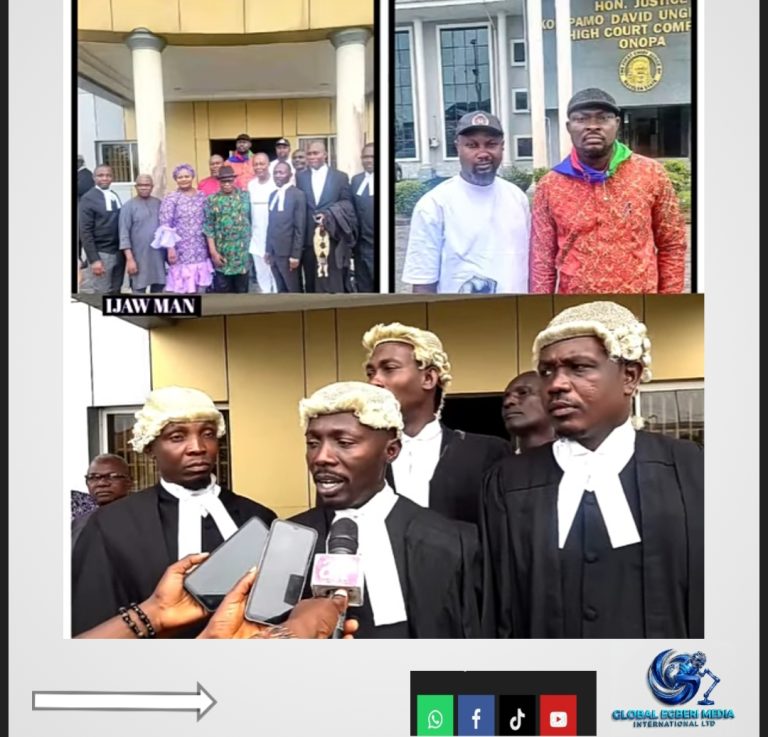
Chief Igbadiwei’s emergence was not merely the outcome of a ballot—it was the culmination of a prolonged legal and political struggle. Prior to this election, the process had been stalled following an intervention by the Rivers State High Court, which issued an interim order halting the earlier scheduled polls of March 7, 2026. The legal action, initiated by Igbadiwei himself, stemmed from his exclusion from the original contest, a move he argued was unconstitutional.
His persistence not only redefined the trajectory of the election but also reinforced the principles of inclusion and fairness within the INC’s constitutional framework. From courtroom advocacy to electoral triumph, Igbadiwei’s journey embodies a rare blend of legal tenacity and political resolve.
The Numbers That Made History
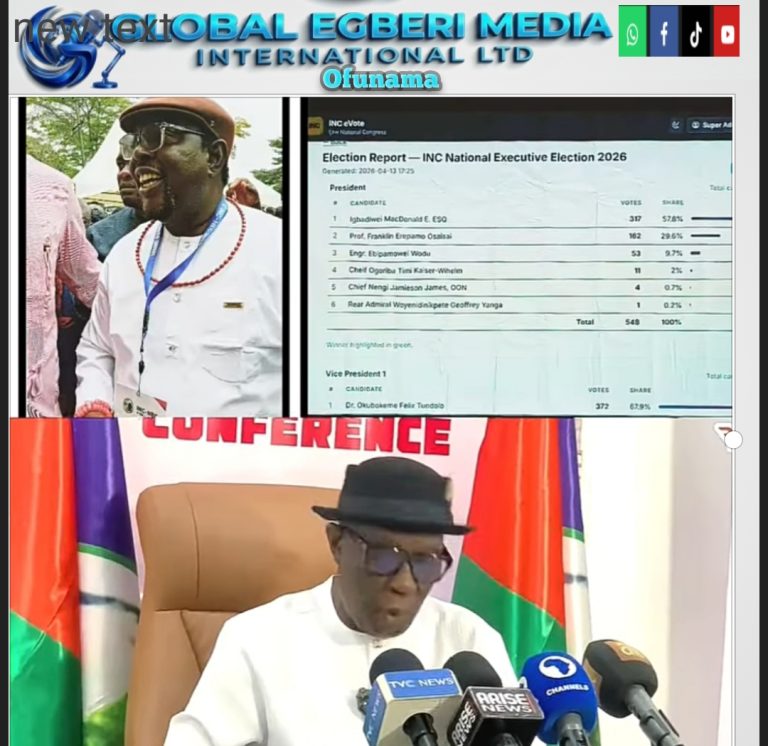
The election witnessed robust participation from across the Ijaw ethnic nationality, with six candidates contesting fiercely for the prestigious office. A total of 685 accredited delegates, representing various clans and zones, took part in the voting process—an indication of the broad-based legitimacy the election sought to achieve.
In the final tally, Igbadiwei secured 317 votes, a decisive margin that placed him ahead of his competitors and affirmed his widespread acceptance among the delegates.
The Role of Leadership and Mediation
Amid the brewing crisis that threatened to derail the electoral process, the timely intervention of Douye Diri proved instrumental. Through strategic engagement with key stakeholders, Governor Diri facilitated dialogue that helped de-escalate tensions and paved the way for the successful conduct of the election.
His involvement underscores the critical role of state leadership in preserving unity and stability within influential socio-cultural organizations such as the INC.
INC: A Pillar of Ijaw Identity
Established in 1991, the Ijaw National Congress remains the foremost socio-cultural organization representing the interests of the Ijaw people across Nigeria and beyond. With a structured network spanning zonal, clan, chapter, and community levels, the INC has consistently served as a unifying platform for advocacy, cultural preservation, and political engagement.
The emergence of a new president at this critical juncture signals a fresh chapter—one laden with expectations for cohesion, progressive leadership, and renewed advocacy for the Niger Delta region.
Editorial: Beyond Victory—A Defining Test of Leadership and Unity
The emergence of MacDonald Igbadiwei as President of the Ijaw National Congress is, without doubt, a victory for democratic resilience—but it must not be mistaken for the end of the crisis that preceded it.
The INC stands today at a delicate crossroads. The same organization that prides itself as the unified voice of the Ijaw people has, in recent months, been shaken by internal divisions, legal confrontations, and competing interests. That the election eventually held is commendable; however, the deeper question remains—has unity truly been restored, or merely postponed?
Leadership at this level demands more than electoral victory. It requires reconciliation. It demands the courage to bring dissenting voices to the table, to rebuild trust among aggrieved stakeholders, and to reaffirm the INC as a collective platform rather than a battleground of factions.
Furthermore, the new leadership must rise above the politics of exclusion that triggered the initial legal dispute. The intervention of the Rivers State High Court serves as a reminder that institutional integrity must be upheld at all times. Constitutional processes should not be tools of convenience but pillars of legitimacy.
The role played by Douye Diri also offers a valuable lesson: dialogue remains the most powerful instrument of conflict resolution. The incoming administration must institutionalize such engagement mechanisms to prevent future crises.
Most importantly, the INC must refocus on its core mandate—the defense of Ijaw interests within the Nigerian federation. At a time when the Niger Delta continues to grapple with environmental degradation, economic marginalization, and unresolved resource control debates, the expectation from this new leadership is enormous.
This is not just a leadership transition; it is a moment of reckoning.
If Chief Igbadiwei succeeds in uniting the house, strengthening institutional credibility, and repositioning the INC as a formidable advocate for the Ijaw nation, history will remember this election not for its controversies—but for the rebirth it inspired.
If not, it may simply go down as another missed opportunity.
Source: Congress Newspaper
🌐 https://globalegberi.com.ng
About the Author