
Nigeria Celebrates Four Years Without Piracy as NIMASA Strengthens Maritime Security
Nigeria has recorded four consecutive years without piracy attacks within its territorial waters, marking a major milestone in the country’s maritime security journey and a significant boost to confidence within the Gulf of Guinea shipping corridor.
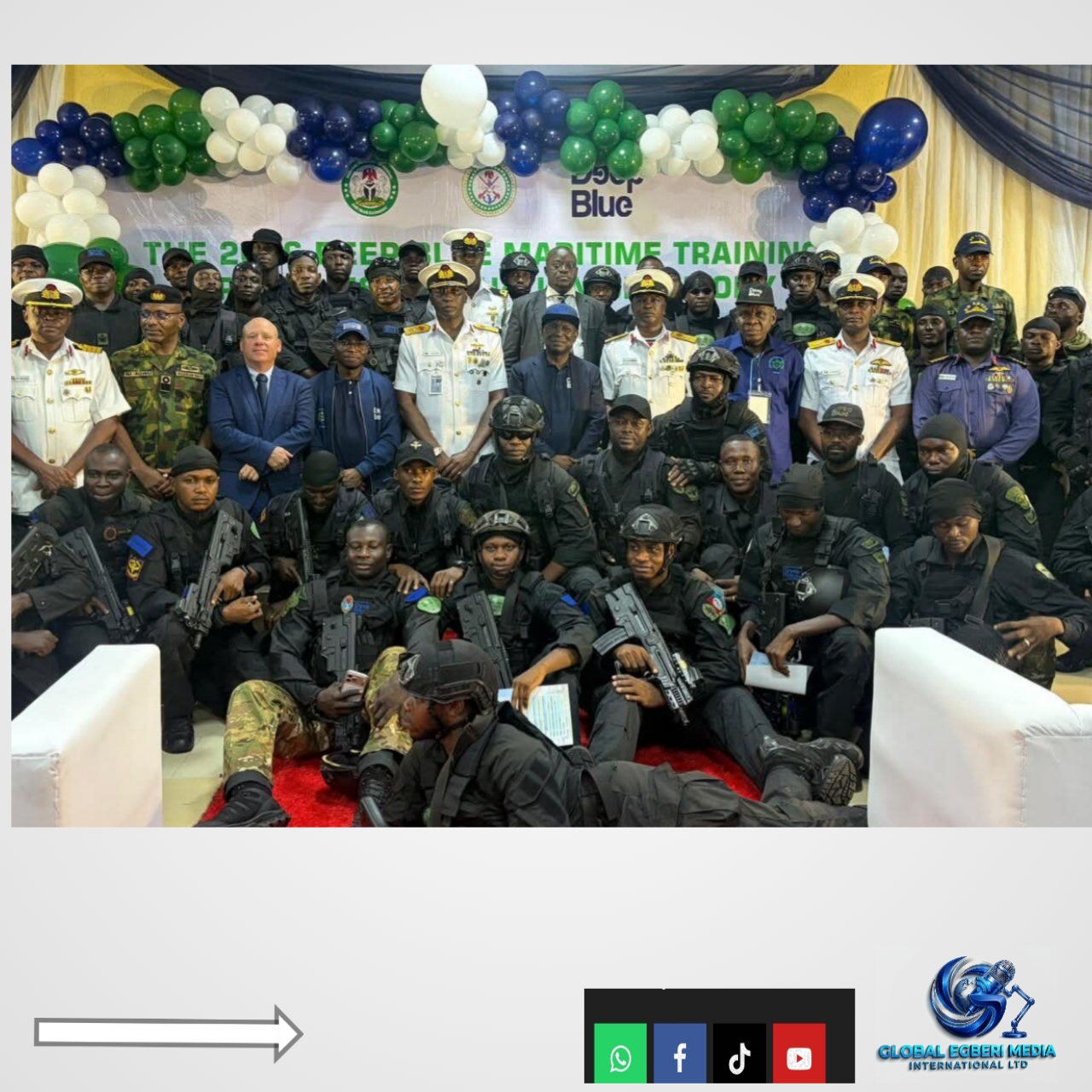
The remarkable achievement was disclosed by the Director-General of the Nigerian Maritime Administration and Safety Agency, Dayo Mobereola, during the C4i capability demonstration and graduation ceremony held in Lagos.
Speaking at the event, Mobereola noted that the success reflects Nigeria’s growing operational strength, coordinated intelligence gathering, and improved maritime surveillance architecture aimed at protecting the nation’s coastal and offshore assets.
According to him, Nigeria’s sustained zero-piracy status has become a major reference point in international maritime discussions, especially within the Gulf of Guinea region which was once regarded as one of the world’s most dangerous maritime routes.
177 Personnel Complete Specialized Maritime Security Training
The ceremony also witnessed the graduation of 177 specially trained personnel under the Command, Control, Communication, Computer, and Intelligence (C4i) operational framework.
The intensive training programme was designed to strengthen rapid response operations, intelligence coordination, maritime monitoring, and crisis management capabilities across Nigeria’s waterways.
Officials explained that the programme forms part of broader efforts to consolidate gains already achieved through the Deep Blue Project and other maritime security interventions initiated by the Federal Government.
Industry stakeholders have consistently argued that enhanced maritime security is critical to Nigeria’s economic growth, oil and gas operations, international trade, and regional stability.
A New Maritime Reputation Emerging
For years, piracy attacks in the Gulf of Guinea posed serious threats to shipping companies, foreign investors, oil installations, and seafarers operating within West African waters.
The region previously accounted for a significant percentage of global piracy incidents, forcing international shipping operators to pay high insurance premiums and security costs.
However, Nigeria’s recent security improvements appear to be gradually changing international perceptions about maritime safety within the country’s waters.
Analysts say the sustained decline in piracy incidents demonstrates stronger inter-agency cooperation among maritime authorities, the Nigerian Navy, intelligence units, and regional security partners.
Editorial Insight: Beyond Celebration Lies Bigger Responsibility
While the four-year piracy-free record deserves national commendation, experts warn that maintaining such momentum may prove even more difficult than achieving it.
Maritime crime constantly evolves, adapting to security strategies and exploiting weak enforcement gaps. This means Nigeria cannot afford complacency.
The country’s maritime authorities must continue investing in technology, intelligence sharing, personnel training, and regional collaboration to prevent criminal networks from resurfacing.
The Gulf of Guinea remains economically strategic not only to Nigeria but to global energy and shipping markets. Any return of piracy activities could damage investor confidence and reverse years of hard-earned progress.
There is also growing expectation that improved maritime security should translate into broader economic benefits for coastal communities through increased trade, employment opportunities, port activities, and maritime investments.
For many observers, the latest announcement represents more than a security statistic. It symbolizes Nigeria’s determination to reclaim control of its waters and reposition itself as a stable maritime power within Africa.
Source: Maritime Security Briefing / NIMASA
Author: Dr. Odimientimi Agbedeyi
About the Author