Warri’s Political Earthquake: INEC Redraws Electoral Map Amid Ethnic Tensions and Historic Expectations
A fresh political tremor has swept across the creeks and urban corridors of Delta State following the official release of the final ward delineation report for the Warri Federal Constituency by the Independent National Electoral Commission (INEC), a development many observers describe as one of the most consequential political restructurings in the Niger Delta in recent history.
The newly unveiled framework, which emerged after years of legal battles, protests, ethnic anxieties, stakeholder consultations, and judicial interventions, has now redefined the political architecture of Warri North, Warri South, and Warri South-West Local Government Areas.
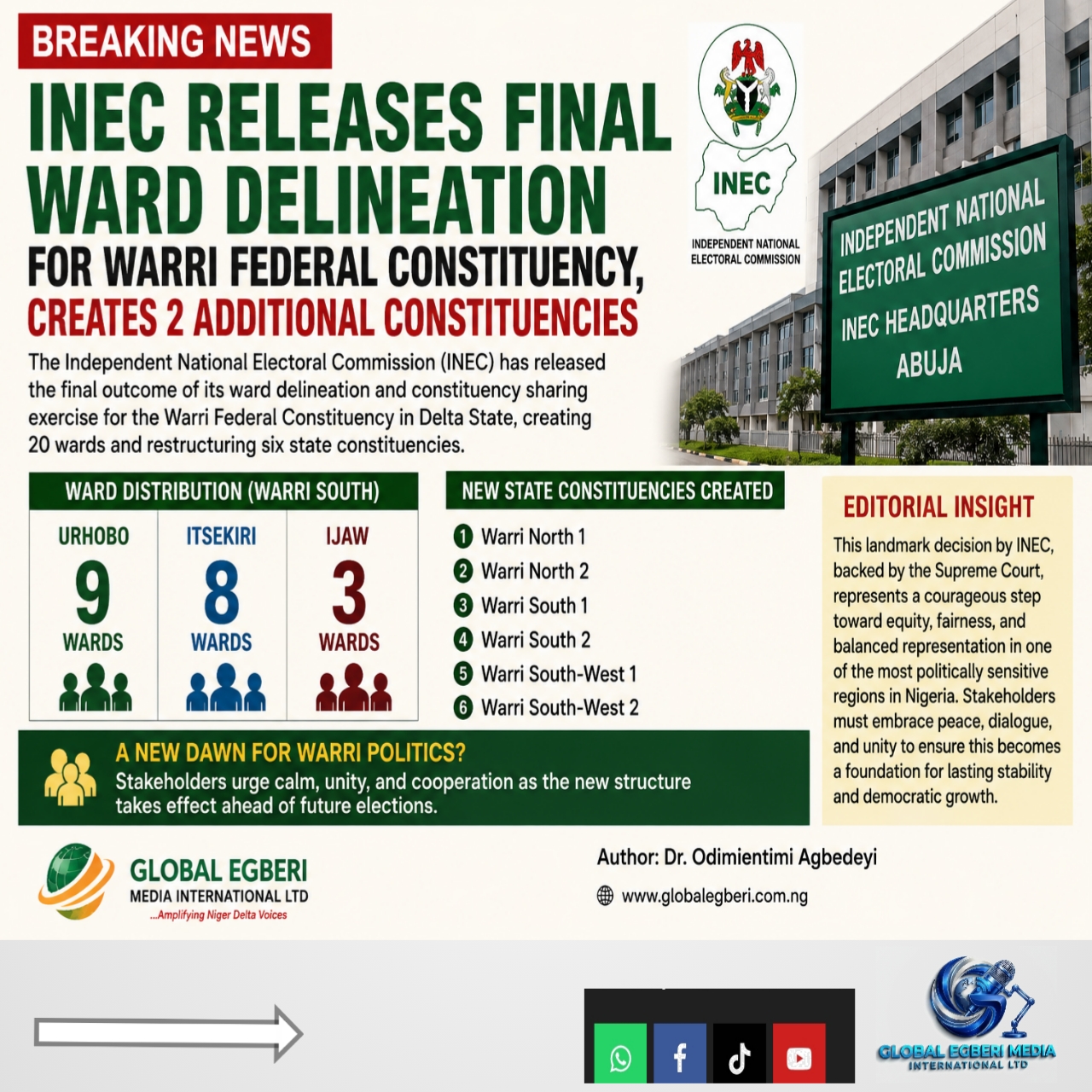
According to reports monitored by Global Egberi Media International Ltd, the delineation exercise produced a total of twenty wards within Warri South, allocating nine wards to the Urhobo ethnic nationality, eight to the Itsekiri ethnic nationality, and three to the Ijaw ethnic nationality. (TheStar)
Beyond ward allocations, INEC also formalized six state constituencies within the federal constituency structure, namely:
- Warri North 1
- Warri North 2
- Warri South 1
- Warri South 2
- Warri South-West 1
- Warri South-West 2
The commission explained that the exercise was conducted in compliance with constitutional provisions and the Electoral Act following the landmark Supreme Court judgment delivered on December 2, 2022, which directed INEC to undertake a fresh and constitutionally compliant delineation exercise within the Warri Federal Constituency. (TheStar)
A Political Volcano Long Waiting to Erupt
For decades, Warri has remained more than a geographical location. It has been a combustible political theatre where history, oil wealth, ethnicity, ancestral claims, and electoral representation collide with volatile intensity.
The struggle over wards and polling units in Warri is deeply rooted in fears of political domination, demographic interpretation, and access to state power among the three dominant ethnic nationalities — the Ijaw, Itsekiri, and Urhobo peoples.
Successive elections within the region have often carried undertones of mistrust, accusations of marginalisation, and disputes over political representation. In many ways, the ward delineation controversy evolved into more than an electoral exercise; it became a symbolic battle over identity, recognition, and historical legitimacy.
The Supreme Court judgment that triggered the current exercise was itself a watershed moment, compelling INEC to revisit the electoral structure of the constituency after allegations that previous arrangements failed to reflect constitutional realities. (TheStar)
Court Victories Clear Path for Implementation
Recent judicial developments appear to have further strengthened INEC’s resolve to proceed with implementation.
Only days ago, both the Court of Appeal and the Federal High Court reportedly dismissed suits challenging the delineation process and interim reports earlier released by INEC. (BIGPEN NIGERIA)
The legal victories effectively removed major procedural obstacles that had threatened to delay implementation before the 2027 elections.
Observers believe the court rulings have now placed enormous responsibility on political actors within Warri to manage public reactions carefully and avoid inflammatory rhetoric capable of destabilising the fragile peace within the region.
Editorial Insight: Between Justice and Fragile Peace
What INEC has released may look like a technical electoral document on paper, but in reality, it is a political detonator with the capacity to either heal historical wounds or deepen ethnic suspicions depending on how stakeholders respond.
The Warri question has never merely been about numbers. It is about dignity, belonging, visibility, and power.
Every ward created or removed carries emotional, historical, and political implications for communities that have spent generations defending ancestral narratives and political relevance.
This is why the current delineation exercise demands statesmanship rather than triumphalism.
No ethnic nationality should weaponise the outcome as a tool for humiliation against another. Likewise, no community should interpret every administrative adjustment as an existential attack. The danger in ethnically charged political environments is that arithmetic can quickly become ammunition.
INEC, on its part, must maintain absolute transparency and continue stakeholder engagements to prevent misinformation from poisoning public trust.
The commission has repeatedly stated that the exercise was guided strictly by constitutional principles and judicial directives rather than ethnic preferences. (wp1.inecnigeria.org)
Yet, beyond legality lies perception — and in politics, perception often determines stability.
A Test for Niger Delta Leadership
The latest development also places enormous moral responsibility on political leaders, traditional rulers, youth organizations, and community stakeholders across the Niger Delta.
Warri has experienced enough seasons of tension in the past. What the region requires now is mature leadership capable of transforming political disagreements into constitutional dialogue rather than communal confrontation.
Analysts warn that the coming months may witness intense political realignments as parties and aspirants begin recalculating electoral possibilities under the new structure ahead of 2027.
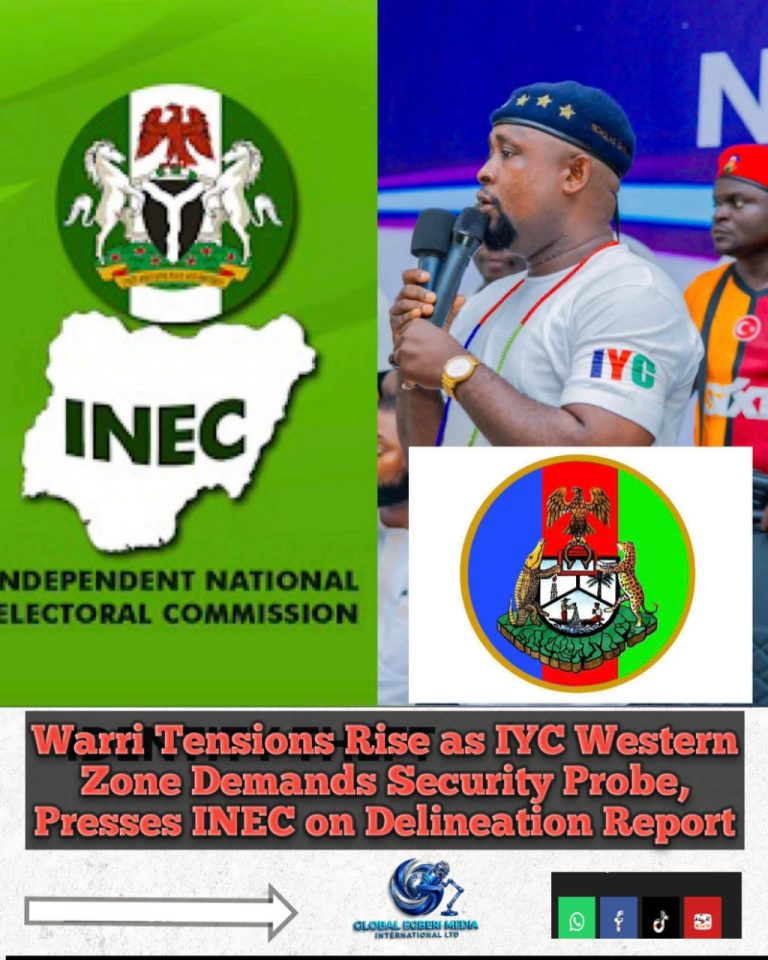
Already, pressure groups and advocacy organisations across the three ethnic blocs have intensified public statements either supporting or questioning aspects of the delineation outcome. (Coastal Times)
Still, many residents remain hopeful that the exercise could finally open a new democratic chapter anchored on fairness, inclusion, and improved representation.
Whether this delineation becomes a bridge toward political equilibrium or another chapter in Warri’s long history of electoral disputes will largely depend on the wisdom, restraint, and sincerity of those who now inherit the moment.
Source: Congress Newspaper, INEC Reports, Court Proceedings
Author: Dr. Odimientimi Agbedeyi
About the Author