
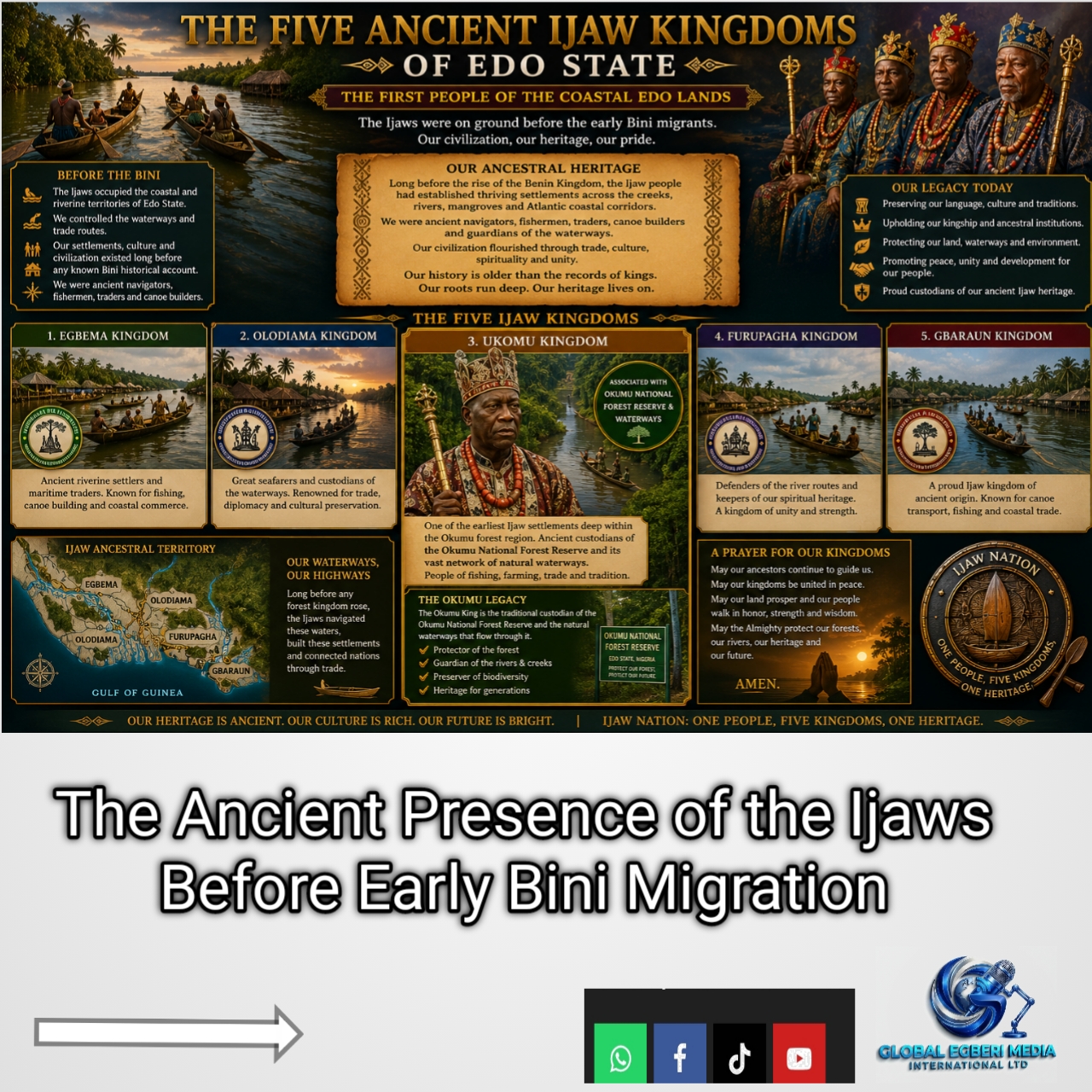
The Ancient History of the Five Ijaw Kingdoms in Edo State
The history of the five ancient Ijaw kingdoms in present-day Edo State — Egbema, Olodiama, Ukomu, Furupagha, and Gbaraun Kingdoms — is widely regarded in oral traditions as predating many of the early historical accounts associated with the rise and migration of the Benin people. These kingdoms form part of the western Niger Delta Ijaw civilization, one of the oldest riverine civilizations in West Africa.
Long before the emergence of the centralized Benin monarchy, the Ijaw people had already established thriving settlements across the creeks, rivers, mangroves, and Atlantic coastal corridors stretching from present-day Bayelsa through Delta into the coastal regions of Edo State. Their civilization developed around fishing, canoe carving, salt production, water transportation, trade, and spiritual traditions tied to the rivers and sea.
Traditional narratives preserved among western Ijaw clans maintain that the Ijaws occupied the coastal and riverine territories before the migration and consolidation of early Bini-speaking groups into the forest belt inland.
The Ancient Presence of the Ijaws Before Early Bini Migration
Ijaw oral history strongly maintains that before the establishment of the Benin Kingdom as known today, Ijaw settlements already existed around:
- The Ovia River axis
- Gelegele waterways
- Coastal Edo territories
- Mangrove river settlements
- Atlantic fishing corridors
According to these traditions, the Ijaws served as ancient navigators of the waterways and custodians of river routes connecting inland territories to the Atlantic Ocean.
Some historical traditions further state that early migrants moving toward the forest regions that later became Benin territory interacted with already established Ijaw riverine populations. The Ovia River, in particular, is remembered in many oral accounts as a major migration and transportation route.
The Ijaws were known for:
- Advanced canoe technology
- River warfare
- Fishing settlements
- Maritime trade
- Spiritual shrines tied to water deities
- Coastal commerce with neighboring peoples
These traditions support the long-standing belief among many western Ijaw communities that the Ijaws were among the earliest organized inhabitants of the coastal Edo region.
The Five Ancient Ijaw Kingdoms
1. Egbema Kingdom
Egbema Kingdom is one of the oldest western Ijaw kingdoms. The people are historically associated with fishing, canoe navigation, and coastal trade. Ancient Egbema settlements were strategically located along waterways that connected inland communities with the Atlantic coast.
The kingdom became influential through maritime trade networks and maintained strong cultural links with other Ijaw territories across the Niger Delta.
2. Olodiama Kingdom
Olodiama Kingdom is historically respected as a major Ijaw coastal kingdom. Oral traditions describe the Olodiama people as ancient seafarers and custodians of important waterways.
The kingdom played significant roles in regional commerce, fishing, and inter-community diplomacy. The people preserved their Ijaw identity despite interactions with neighboring ethnic groups.
3. Ukomu Kingdom
Ukomu Kingdom occupies an important place in western Ijaw history. The kingdom is linked to some of the earliest Ijaw settlements along the Okomu forest reserve and adjoining waterways.
The people of Ukomu traditionally depended on fishing, farming, canoe carving, and river trade. Their oral traditions emphasize their ancient occupation of the riverine territories before the expansion of inland forest kingdoms.
4. Furupagha Kingdom
Furupagha Kingdom is another ancient western Ijaw kingdom with deep historical roots in Edo coastal territories. The people are traditionally known for fishing, spiritual traditions, and maritime activities.
The kingdom became notable for defending river routes and maintaining strong alliances with neighboring Ijaw settlements.
5. Gbaraun Kingdom
Gbaraun Kingdom is historically linked to the wider western Ijaw migration network across Delta and Edo coastal territories. The kingdom served as a major center of Ijaw cultural preservation and riverine authority.
Its people were known for canoe transportation, fishing, traditional spirituality, and coastal commerce.
Ijaw Civilization and the Benin Connection
Historical and oral traditions across many western Ijaw communities maintain that the Ijaws had already established settlements throughout the coastal waterways before the rise of the Benin Kingdom.
Some traditions even suggest that:
- The Ovia River served as a migration corridor.
- Early inland migrants depended on riverine guidance.
- The Ijaws controlled significant water routes and fishing territories.
- Riverine civilization in the region predates the forest-based imperial structures later associated with Benin.
While academic historians continue to debate timelines and migration patterns, the oral histories of the western Ijaw people strongly uphold the antiquity of the five kingdoms and their foundational presence in the coastal Edo region.
Cultural Legacy of the Five Kingdoms
Today, the five Ijaw kingdoms continue to preserve:
- Ancient Ijaw language and dialects
- Canoe regattas
- Traditional kingship institutions
- Riverine festivals
- Fishing heritage
- Spiritual customs
- Oral history traditions
These kingdoms remain living symbols of the ancient western Niger Delta civilization and the enduring presence of the Ijaw people in Edo State.
About the Author








It is very good historical facts