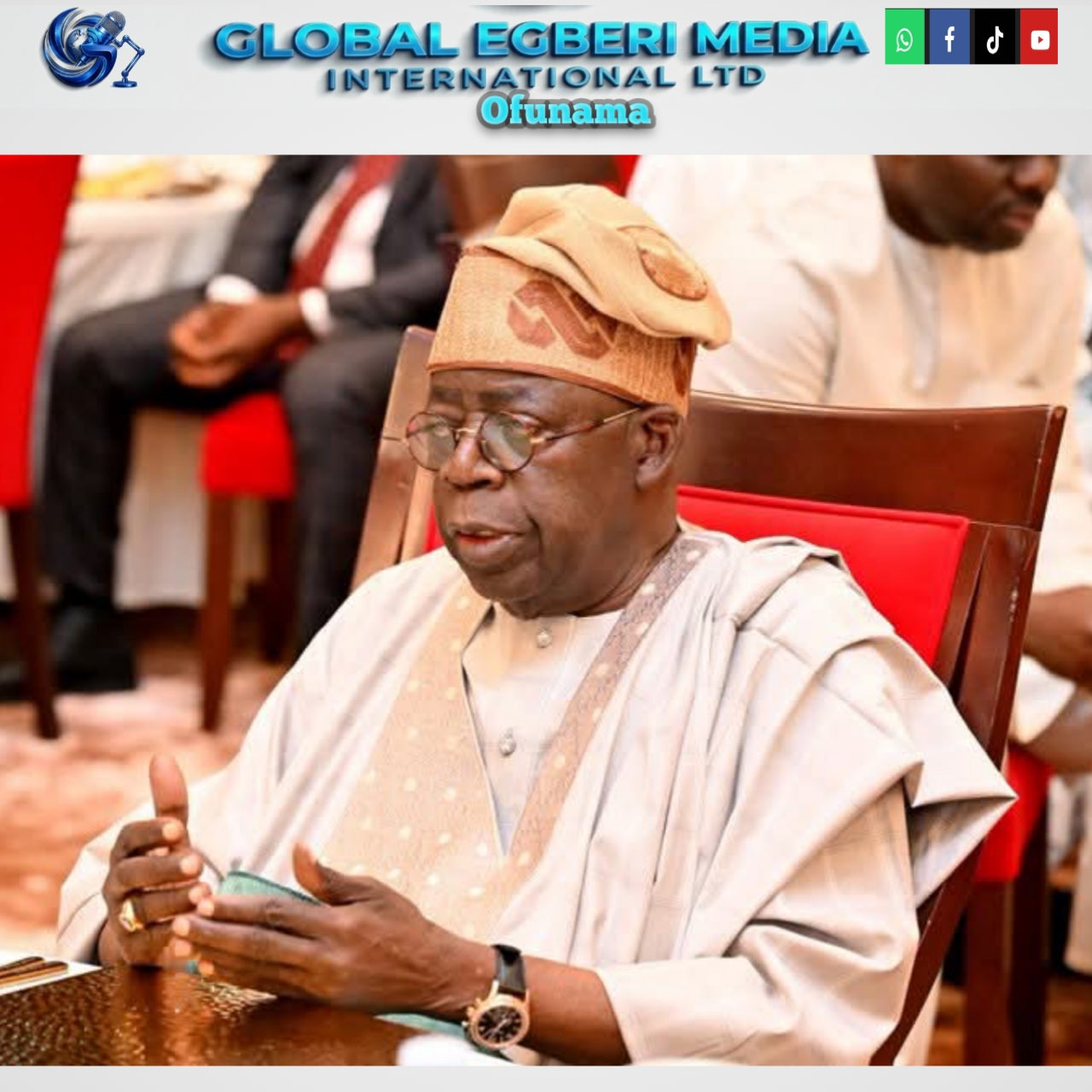
Tinubu Seeks Senate Approval for $516.3 Million Loan to Drive Sokoto–Badagry Superhighway Project
By Dr. Odimientimi Agbedeyi
For Publication on Global Egberi Media International Ltd.
President Bola Ahmed Tinubu has formally approached the Senate for approval of a fresh $516.3 million external loan to finance critical sections of the proposed Sokoto–Badagry Superhighway, a flagship infrastructure project designed to connect Nigeria’s North-West corridor to the commercial arteries of the South-West. (Channels Television)
The request, transmitted in a formal communication to the upper legislative chamber and read during plenary by Senate President Godswill Akpabio, signals another ambitious step in the administration’s drive to reshape Nigeria’s transport architecture under the Renewed Hope Agenda. (Channels Television)
A Highway of Strategic Magnitude
The proposed superhighway, stretching approximately 1,000 kilometres, is expected to traverse Sokoto, Kebbi, Niger, Kwara, Oyo, Ogun, and Lagos States, linking Illela near the Niger border to Badagry, one of Nigeria’s historic coastal gateways. (Channels Television)
Analysts say the road, if completed to specification, could become one of the most consequential infrastructure corridors in modern Nigerian history, providing a terrestrial spine for commerce, agriculture, logistics, and interstate mobility.
It is envisioned as more than asphalt and concrete—it is a potential conveyor belt of productivity.
What the Loan Will Fund
According to details presented to lawmakers, the proposed facility—expected to be arranged through Deutsche Bank AG—will specifically fund Sections 1, Phase 1A and 1B of the project. (Channels Television)
The Federal Government also indicated that counterpart funding exceeding ₦265 billion would be provided for land acquisition, compensation, and related infrastructure obligations. (Channels Television)
The financing structure reportedly carries a nine-year tenor, including a three-year grace period, with pricing tied to the SOFR benchmark plus 5.3 percent annually. (Channels Television)
Why the Project Matters
Economic observers note that the Sokoto–Badagry route could radically compress travel time, reduce freight costs, and open dormant economic belts stretching across multiple geopolitical zones.
For farmers in the North-West, manufacturers in the South-West, traders in North-Central markets, and exporters seeking access to seaports, such a corridor could become a vital artery of movement and value creation.
The road is also expected to improve:
- Interstate trade flows
- Food supply chain efficiency
- Security mobility logistics
- Regional integration
- Rural market access
- Industrial corridor expansion
Borrowing Debate Returns
Yet, as with most sovereign borrowing requests, the proposal is likely to ignite vigorous debate.
Supporters argue that debt used for productive infrastructure can generate long-term economic returns far exceeding repayment costs.
Critics, however, continue to caution about Nigeria’s rising debt obligations, urging prudence, transparency, and measurable outcomes on all externally financed projects.
The central question remains not whether to borrow—but whether borrowed funds will be transformed into durable national assets.
Senate Begins Legislative Review
Following the reading of the President’s request, the Senate referred the matter to its Committee on Local and Foreign Debts, directing the panel to submit its report within one week. (Channels Television)
This signals that legislative consideration may proceed swiftly, especially given the administration’s desire to fast-track strategic capital projects.
Infrastructure as Legacy
For the Tinubu administration, the Sokoto–Badagry Superhighway appears positioned as a legacy-scale undertaking—an audacious attempt to weld distant economic zones into a single transport ecosystem.
If executed with competence, transparency, and engineering discipline, the project could redefine internal commerce and territorial connectivity for generations.
If mismanaged, it risks joining the long register of grand visions that stalled in bureaucratic fog.
For now, Nigeria watches as another chapter unfolds in the enduring contest between ambition, financing, and delivery.
About the Author